You may have driven along Arthur Kaine Drive, Merimbula, but who is Arthur Kaine?

By Melissa Pouliot and Christine Kaine

Presented to Bega Valley Genealogy Society, 30 August 2026

As you drive around Merimbula, built around the ocean and a lake on the NSW Far South Coast, the street names follow a pattern you’d expect in a coastal town – from Beach Street to Lakeview Avenue to Lake and Cliff streets. The next-door town of Pambula’s street names – Merimbola, Toallo, Quondolla and Bullara – have their origins in the local Indigenous language.

But the road that links Merimbula with Pambula, starting at the Black Dolphin Motel, past the airport and the Pambula Merimbula Golf Course, is not named after a landmark or Indigenous language – it’s named after a person. Arthur Kaine.

As you drive along this main artery between Merimbula and Pambula, do you ever wonder who Arthur Kaine is and why he has such a prominent road named after him?

I was commissioned to write the history of Arthur Kaine by his daughter Christine Kaine. I have the advantage of knowing Christine for the past 13 years and hearing many stories about her father.

I started compiling photos, facts, dates and places, although from the outset I was way more interested in discovering the true character of this man. What motivated him to contribute so immensely to his community and beyond and how on earth did he manage to achieve all that he achieved?

I put out a call for photos, newspaper clippings, personal recollections and stories handed down from the older generations and sincerely thank those who contacted me with their memories of Arthur, who died in Merimbula on 17 March 1992, aged 88.

What I really would have loved is to have been able to sit down with those in Arthur’s friendship circle who are no longer with us. People like:

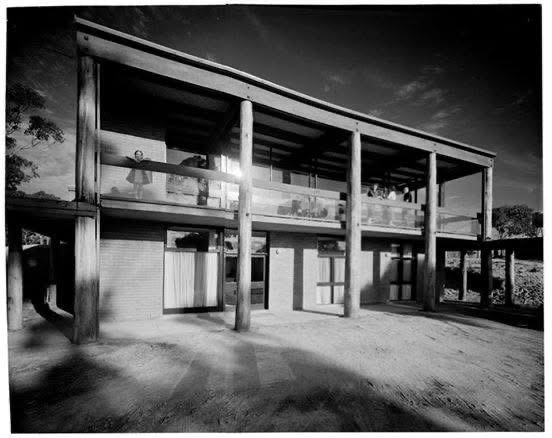
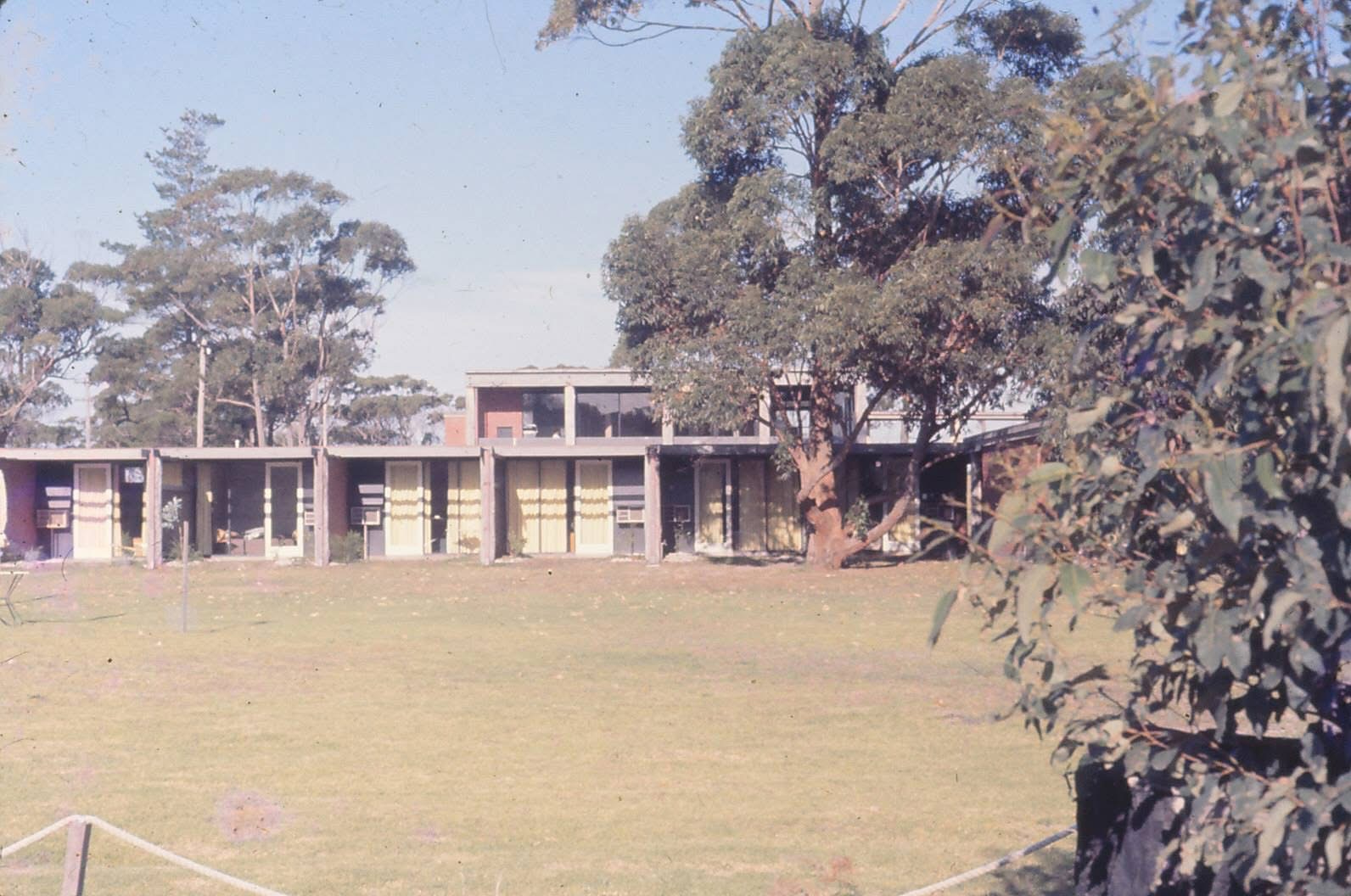
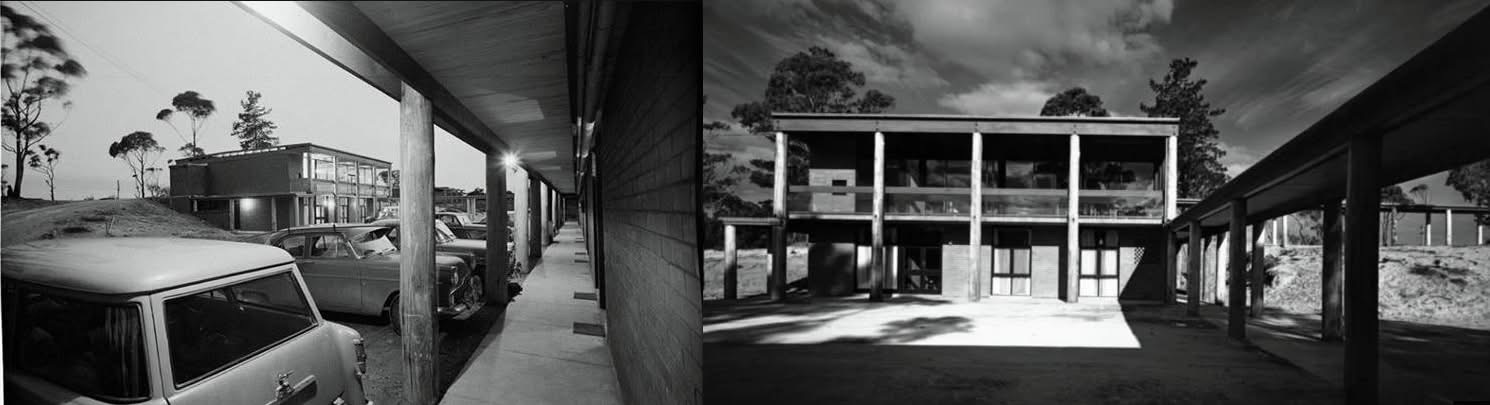
  • Robin Boyd, CBE, Australia’s most influential architect who designed the Black Dolphin Motel and whose design influence is evident in an extension of Arthur’s family home.
  • Professional golfer and course designer Peter Thompson, AO, CBE, who worked closely with Arthur to design and build the Tura Beach golf course. Peter was inducted into the Sport Australia Hall of Fame in 1985 and elevated to Legend of Australian Sport in 2001.
  • Professor Emeritus David Yencken, AO, who worked in industry, politics and academia. Modest and unassuming, Yencken was a visionary thinker, brilliant entrepreneur, astute politician and discerning patron who built the Black Dolphin Motel and was a close family friend of the Kaine’s.

And of course, I would have loved to have sat down with Arthur’s wife, Peace, an active member and office bearer of the CWA for 43 years, a member of NSW Housing Commission Advisory Board for 12 years, district commissioner for the Girl Guides, life member of Merimbula & District Art Group, foundation vice president of Pambula-Merimbula Golf Associates, vice president of Merimbula Hospital Auxiliary and a Meals on Wheels volunteer.

Together, the couple have left a lasting legacy in the Bega Valley that my research will never be able to fully comprehend, and if they were here for me to interview, they would most likely downplay their achievements.

Peace once wrote: “We received back a great deal more than we ever contributed. Our association with other people – the friends we made, some of them lifelong – gave a sense of achievement both personally and as a community.”
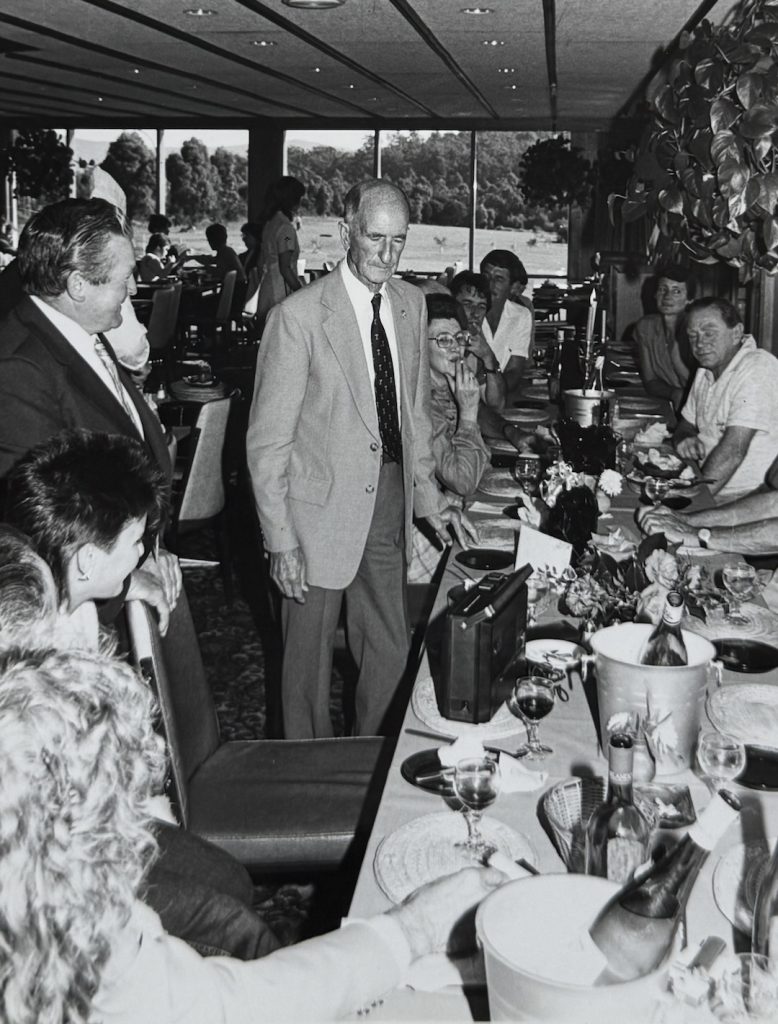
I will now pass on this story for Arthur and Peace’s only daughter Christine to share, and it will go on public record so future generations will know when they drive along Arthur Kaine drive, why it is named as such.


Christine Kaine

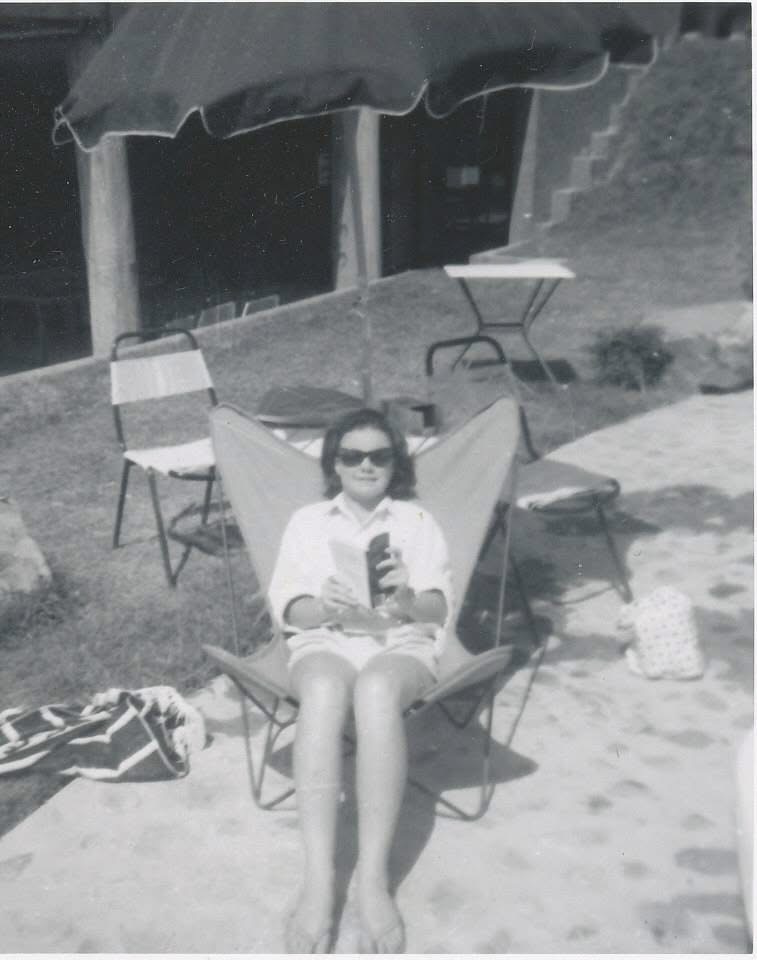
My father was a very gentle, loving person and although he was away a lot working, when he was home we’d play Scrabble and cards – he didn’t really like it when I won! He was a very supportive father. My mother, Peace, was the same. They were very kind, giving people who both contributed amazingly to the community.
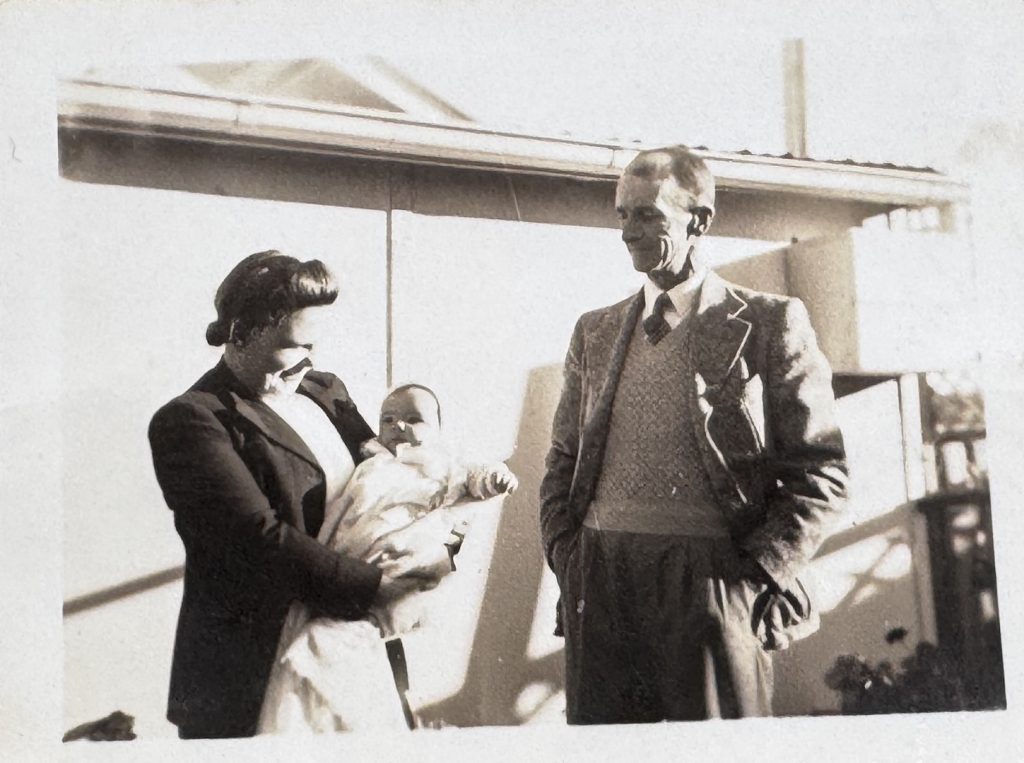
Arthur William Kaine was born into a sawmilling family at Ulverstone, Tasmania on 20 May, 1904, the son of James Kaine and Christina Maud Paton. When he moved to Merimbula after the Second World War in the mid 1940s with my mother Peace, his second wife, the population sign read 200.

My mother’s name comes from being born during an era of peace after the First World War. They met during the Second World War while both working for the Post Master General (PMG) in Sydney.

They purchased two blocks of land side by side in Lakeview Avenue, Merimbula, overlooking Back Lake and Short Point. I still live in the family home my father built.
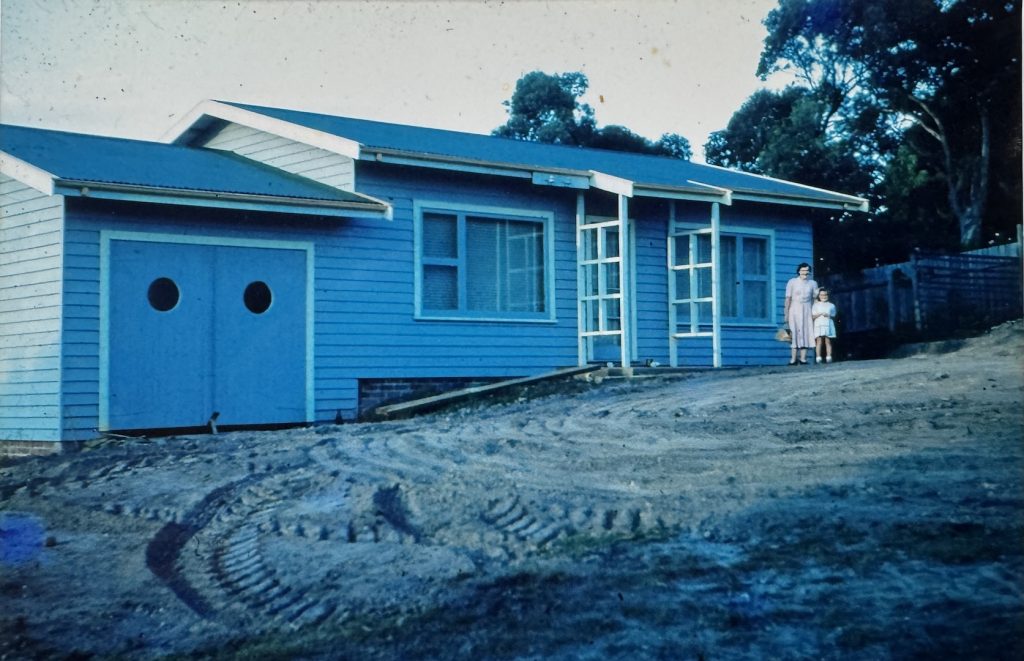
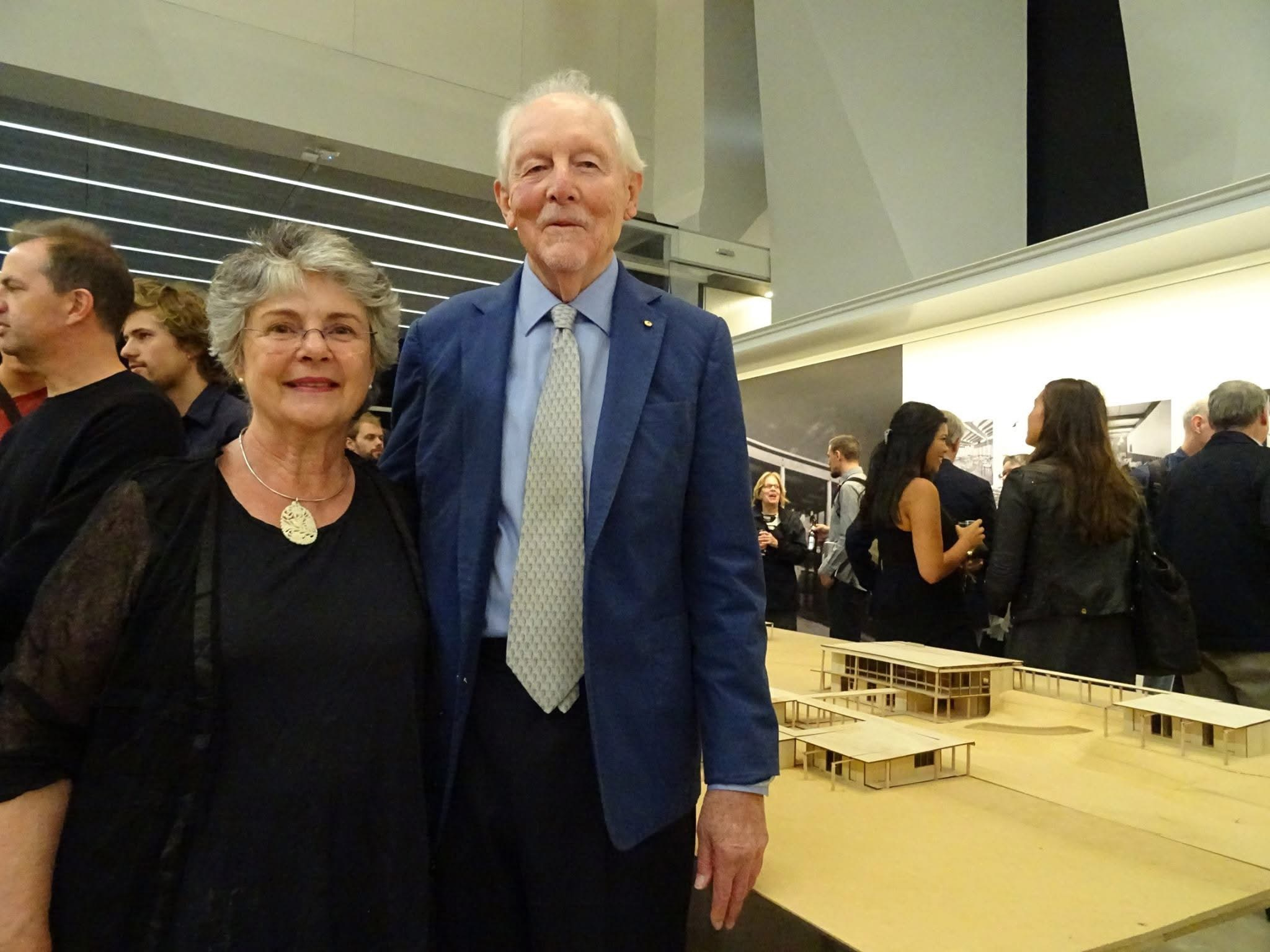
Arthur had two daughters from his first marriage, Carmel and Margaret. Some may recognise the name Carmel Kaine from her illustrious career as an Australian classical violinist. Carmel, who died in 2013, had one child, Katharine, and Margaret, who is 96 now, has two children David (dec) and Elizabeth.

Kind, friendly man

Through Melissa’s research, others have described my father as a kind, friendly man with a keen business brain.

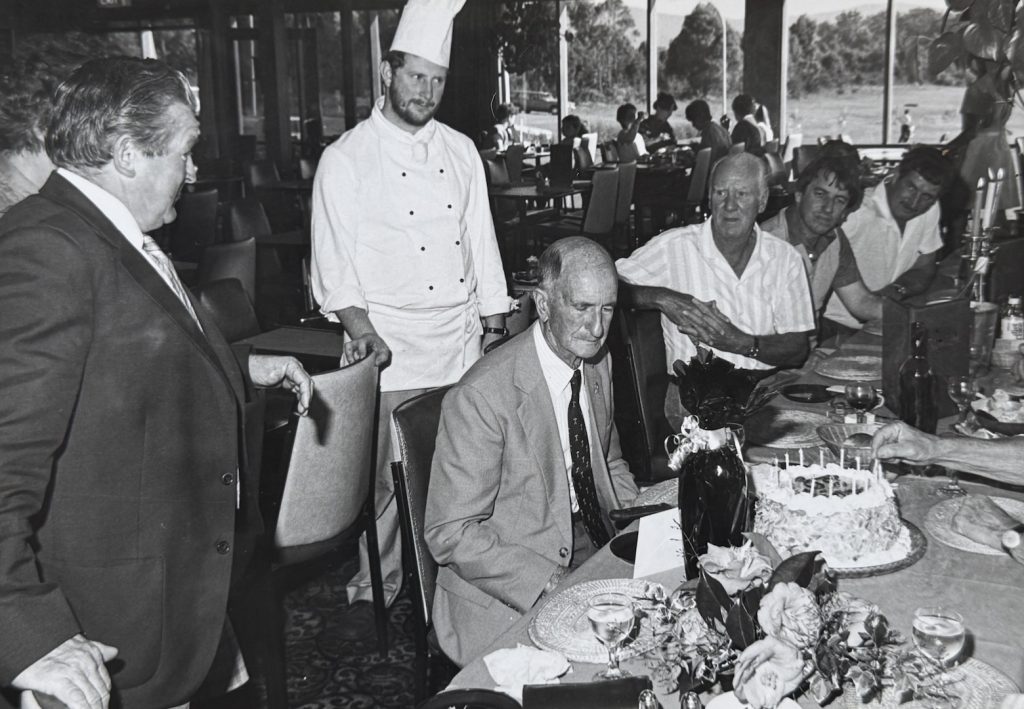
The Pambula Merimbula Golf Club, which opened in 1966, was one of my father’s proudest achievements. It was just a bare block of land and look at it now – a 27-hole championship course rated among the top 100 in Australia.

The community had wanted a golf course for a long time but they could never find enough land. My father looked into it and discovered to put it where it now is, they needed permission from Crown Lands, the local Council and the NSW Government. This wasn’t an easy project to undertake, and the negotiations were immense, but if he wanted to get something done, he would just do it.

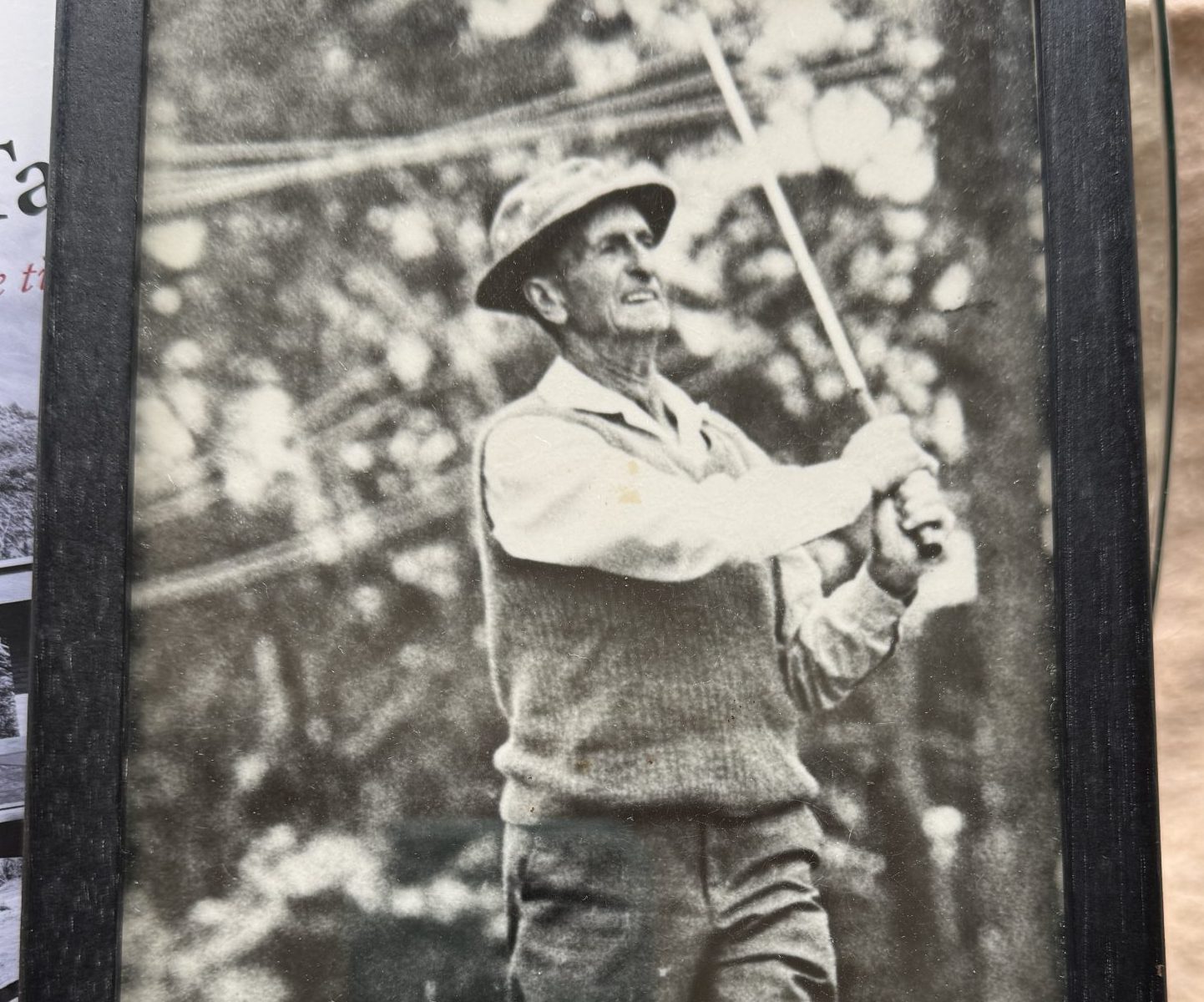
Noel Matthew, the first professional golfer for the Golf Club recalls: “He would putt around the Pambula Merimbula Golf Course on a little motorbike with his golfing buddy Reg Talbot, ex Lord Mayor of Melbourne. He always had a pipe in his mouth and would only take it out to hit the golf ball, then it was immediately returned to his mouth.”

Alan Pearce, who my father employed as the club’s first Secretary-Manager in 1976 while he was President of the committee, said: “He wasn’t a team man, he liked to do things himself because he was a pretty clever man and he didn’t feel others could do things as well as he could. And he got a lot done.”

I agree with Alan. My father spent a short time on the local Council but I don’t think he really enjoyed it; he had very little tolerance for people who didn’t get in and get things done.

But he was also a good listener, and Noel recalls that as a young professional golfer starting out, Arthur always gave him support and encouragement.

Noel said: “He was always looking for ways to improve facilities and make money for the club. He was a hands-on operator who sought advice and opinions of all involved in the golf course. This doesn’t mean he followed other people’s advice but they were always listened to and considered!”

It wasn’t just the Pambula Merimbula Golf Club that he helped establish, he also played a key role in the establishment of the Tura Beach Country Club. The clubhouse and first nine holes were opened on 5 June 1982.

In the Tura Beach Golf Course Story, Member John J Francis wrote: “Director Arthur Kaine was largely instrumental in the early development and success of the club.”

This all happened during my father’s retirement years. I’d better wind back a bit and share some interesting aspects to his early life that not many people know.

Olympic dream

Like the fact that as a young man in his early 20s he was one of Australia’s most promising distance runners with his sights set firmly on representing his country in the Olympic Games.

He left Australia on 17 March 1925 for the United States with the intention of placing himself under the care of a good coach and taking up running seriously.

Unfortunately, when he arrived he found that he could not land in the States, in accordance with the immigration laws of the land, and he was forced to be content with a trip to Canada.

This, of course, proved a great disappointment to him, and he was forced to forgo all his plans. He had a couple of runs with the Y.M.C.A. Club in Vancouver, but these were only to keep in condition, and he did not compete in any big events. Distance running, he said, was on a very low level in Canada.

Though Paavo Nurmi (known as the Flying Finn, who dominated distance running in the 1920s) was in America at the time, Arthur did not see him in action. He saw Randolph Rose, the New Zealand champion.

While in Canada he was working in the Telegraph Department of the Canadian Pacific Railroad Co., and in this capacity travelled a great deal through the country.

Travel was something he always enjoyed, and he and my mother travelled overseas many times during their lives.

He returned from Canada to Wagga Wagga to continue working with the New South Wales Telegraph Department, and a newspaper article in the Wagga Wagga Daily Advertiser (Friday 14 January 1927) writes of him applying for a transfer to Sydney. There, he intended to join Botany Athletic Club and compete in the 26-mile Olympic marathon test, which would decide the Australian representative for the marathon race at the 1928 Olympic Games.

I am not sure what happened after that, but due to economic difficulties, Australia could only afford to send 10 athletes to the Games, as the estimated cost of funding was 720 pounds per athlete. Other athletes were allowed to compete on the condition that they secure private or community funding but we can’t find any record of him competing.

Throughout his life he retained a keen interest in the Olympic Games and travelled to Olympics all over the world as a spectator.

Fishing and sawmilling

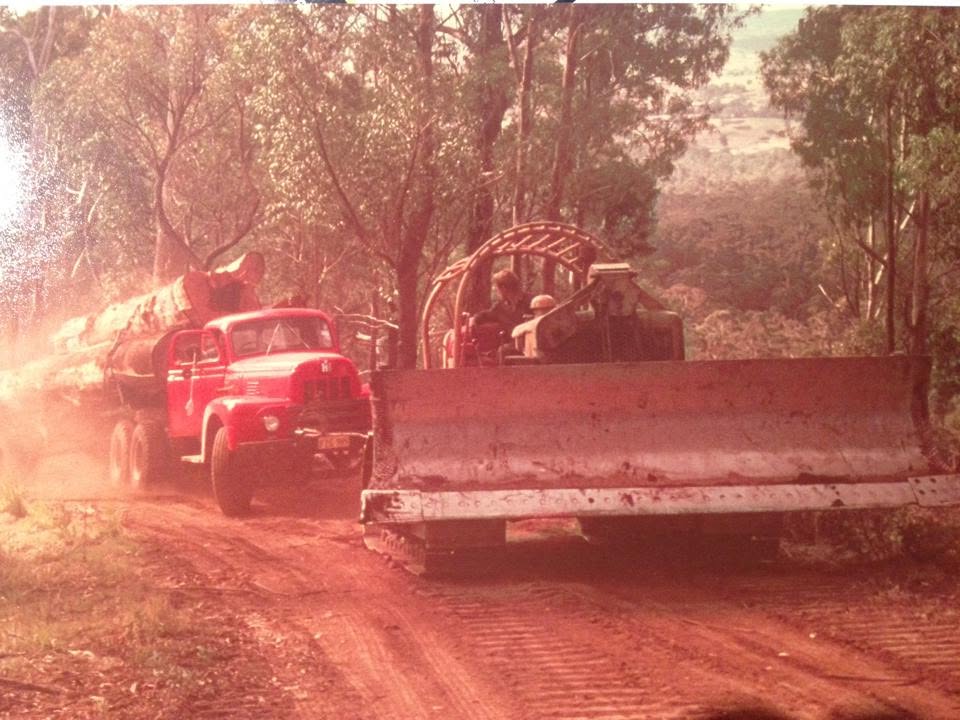
I am not sure why he moved to Merimbula, although he was a keen fisherman which I’m sure was an attraction. At the same time he had an opportunity to get back into the occupation he’d grown up in, sawmilling, and was granted permission to log timber in the Yurammie State Forest at Myrtle Mountain.

The high demand for timber meant the mill ran seven days a week and they lived on site for six months of the year in a cabin where my mother cooked on an open fire and looked after her mischievous young daughter.

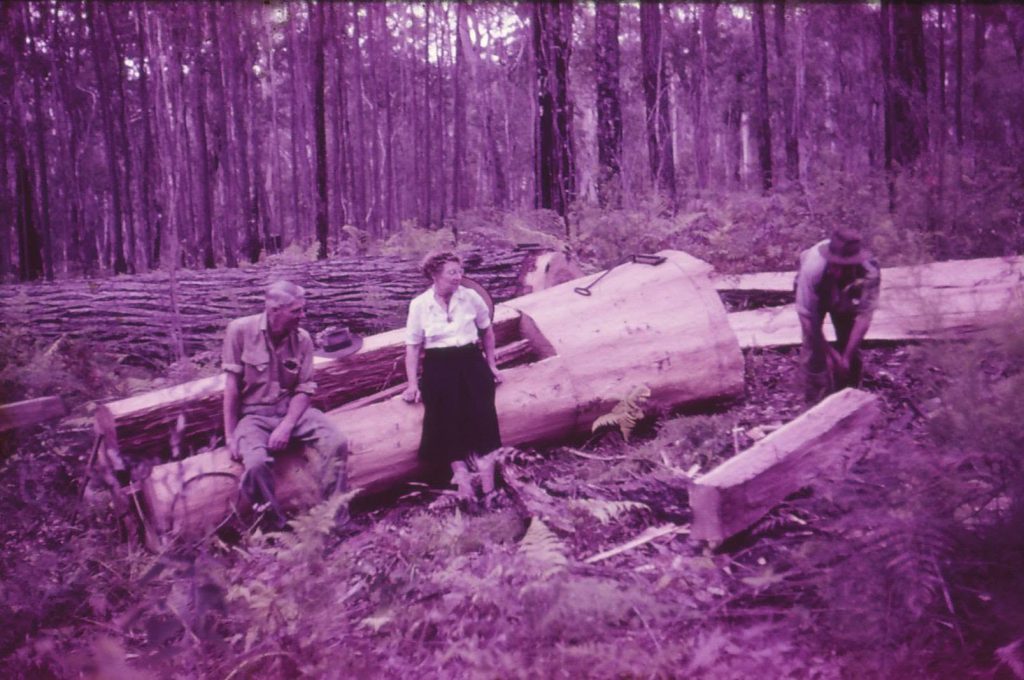
There is a photo on a Facebook page (Arthur Kaine History Merimbula), of me in a neat dress and bobby socks with a ribbon in my hair, sitting on one of the giant logs at the mill. I remember my father’s hands were always stained by the tannin that leached from the timber.
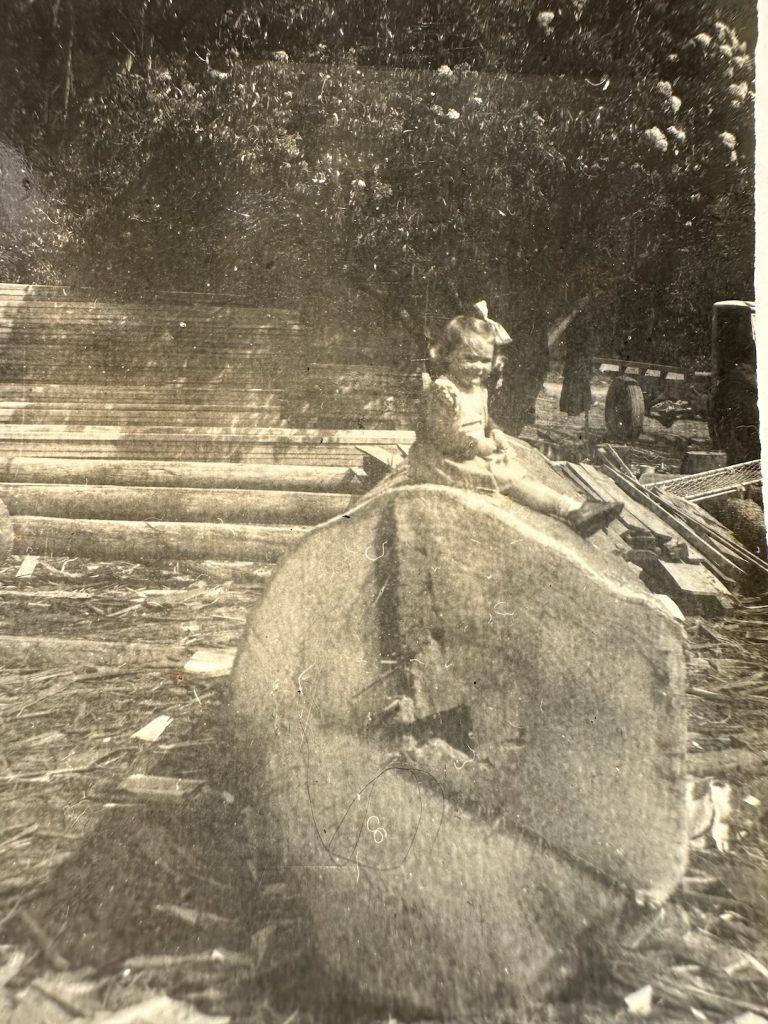
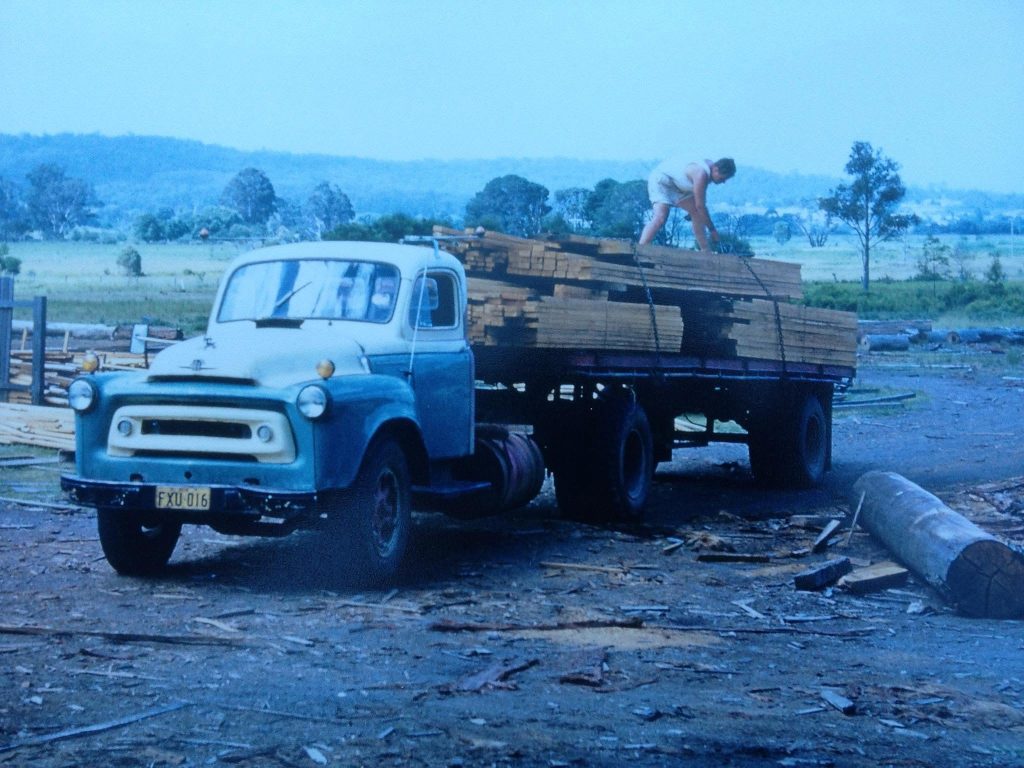
In the late 1950s the mill was moved to Mount Darragh Road, South Pambula, on the edge of our family’s farming land.

At this mill there is a photo of me, around primary school age, standing on top of another large log. This one was taller than head height and wider than the 1960s Holden FC parked next to it. I was in bare feet – it was easier to grip the log without shoes! In this same photo is my mother, dressed in her finest long white dress and high heels.
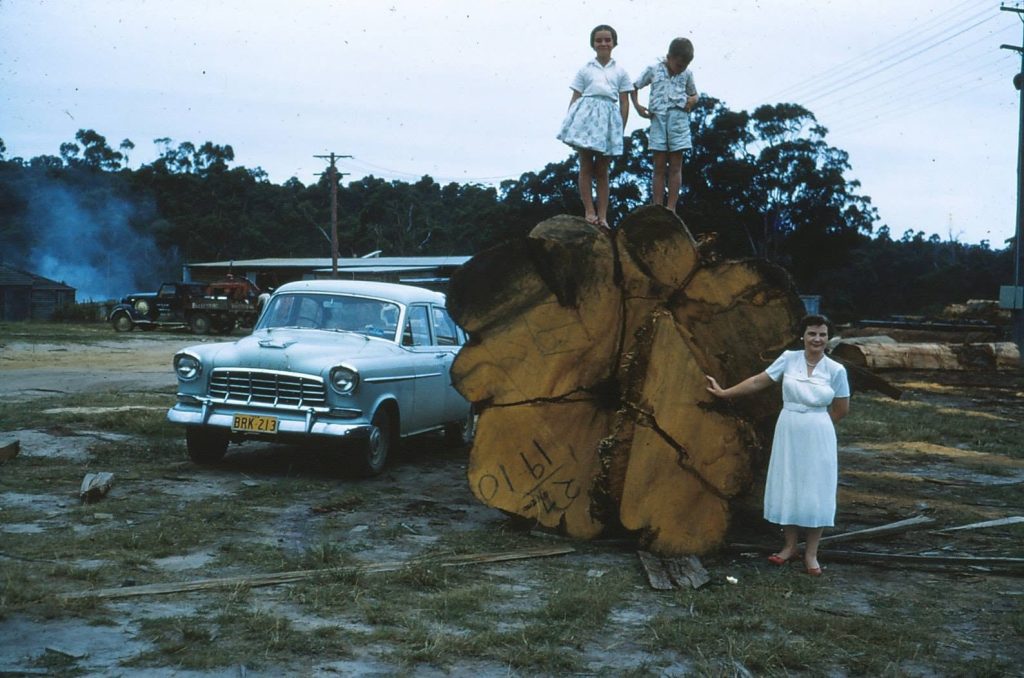
Someone shared a story with Melissa that during the Snowy Mountain Scheme, my mother painted numbers in big white letters on the logs for bridges cut by my father. The workforce during its 25-year construction from 1949 to 1974 was two-third immigrants, and the numbers helped the workers know where to place each log as they couldn’t read English.

We haven’t been able to verify this, however, history can be a bit like that – stories handed down through the generations that may or may not be 100% factual. Like the one that my father was a lumberjack from Canada. It’s easy now to see that maybe his trip to Canada as a young long-distance runner got his early history mixed up.
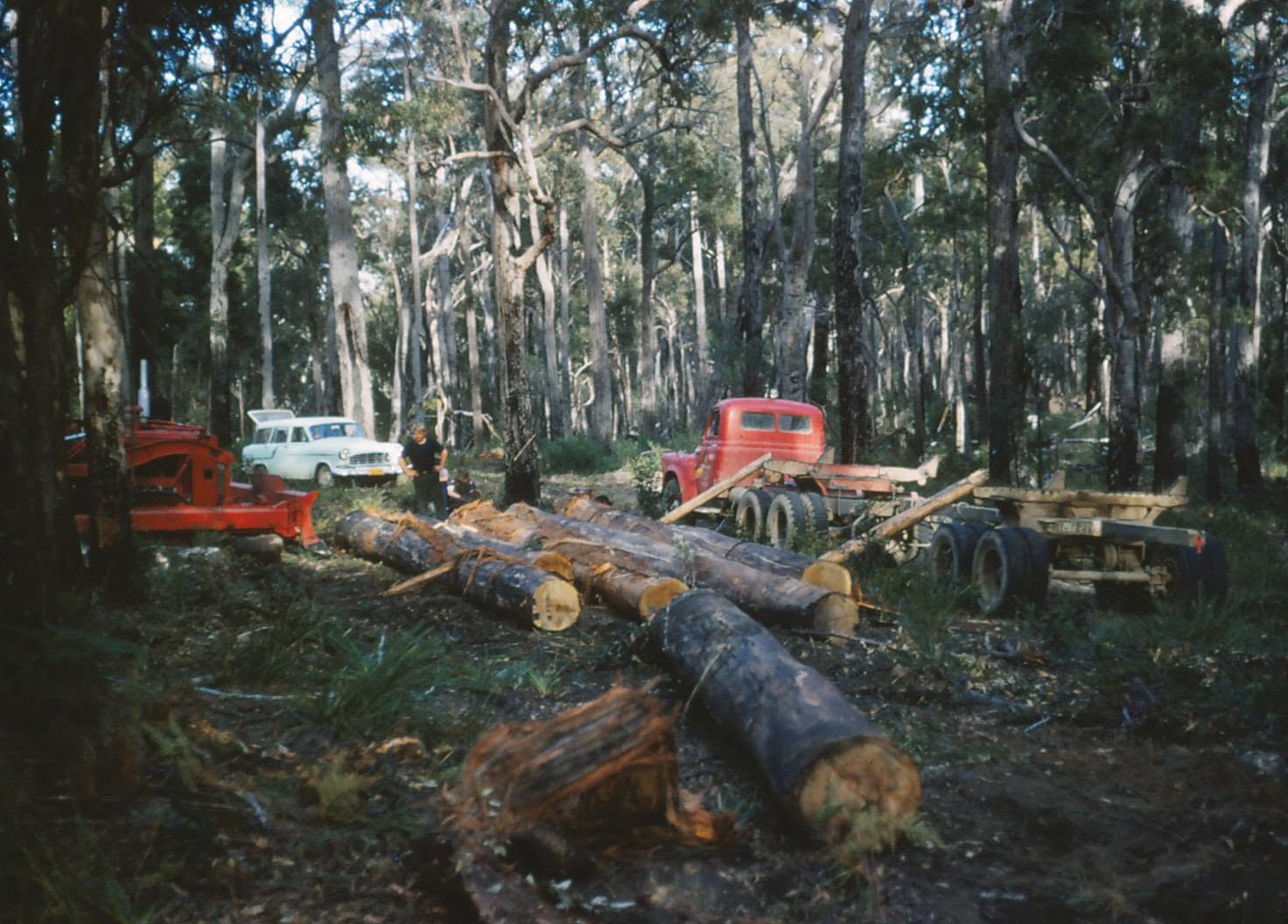
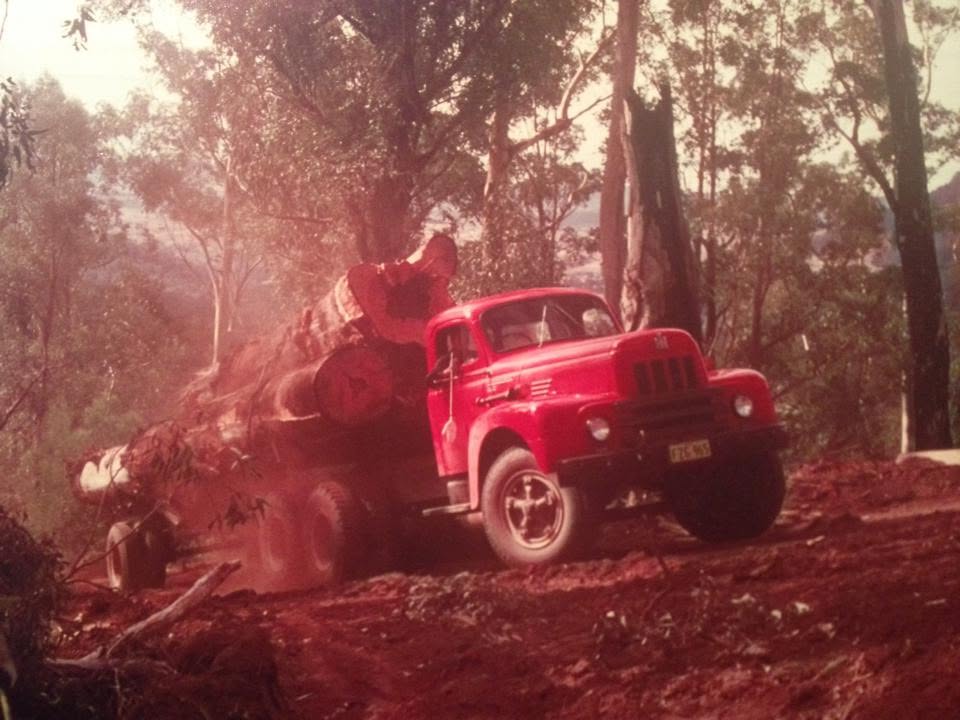
There are countless buildings, homes and developments my father cut timber for – most notably the Black Dolphin Motel, Cooma airport, the Seahorse Inn at Boydtown and the original Merimbula RSL Club on the corner of Main and Market streets. He donated a lot of his timber. For example, in the Merimbula RSL Club history they write that the building was made possible thanks to his ‘generous donation’. He also donated timber to build churches and other buildings.

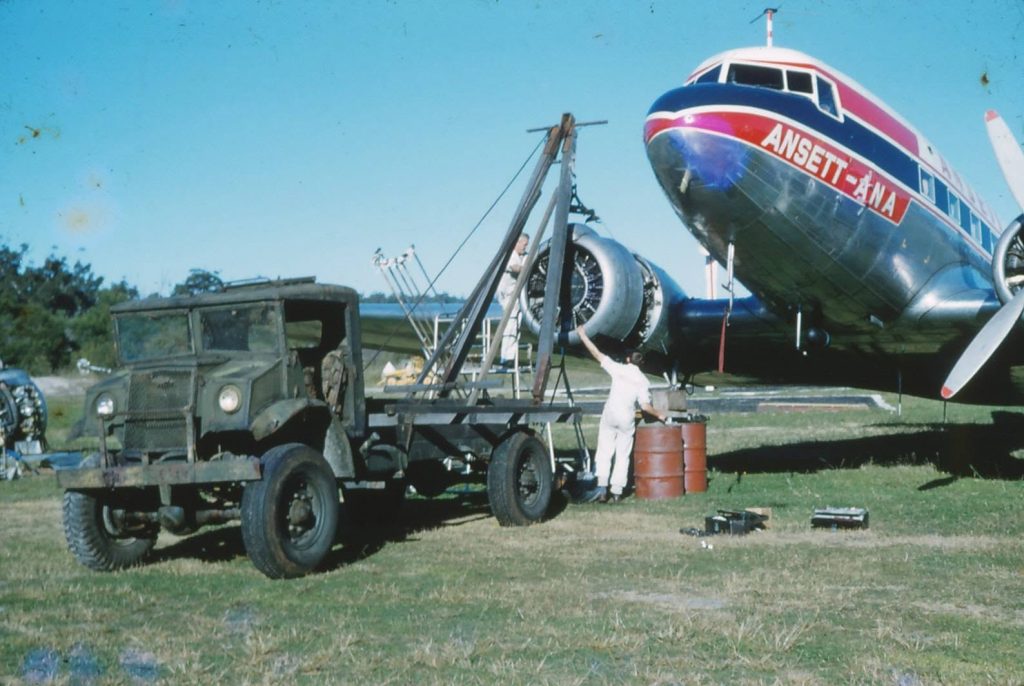
He also invested in new machinery and equipment to make it easier to saw and transport timber. His equipment wasn’t only used for sawmilling – there is a photo of his Blitz crane removing an engine from an Ansett plane that had broken down at the Merimbula airport, as his was the only crane in the area. The engine was so heavy the front wheels of the Blitz kept lifting off the ground.
When Arthur Boyd presented his design for the Black Dolphin Motel, he had to buy a new saw for the large beams which are used throughout the development. You can also see Arthur Boyd’s influence in our family home, with similar beams in our dining and living area.
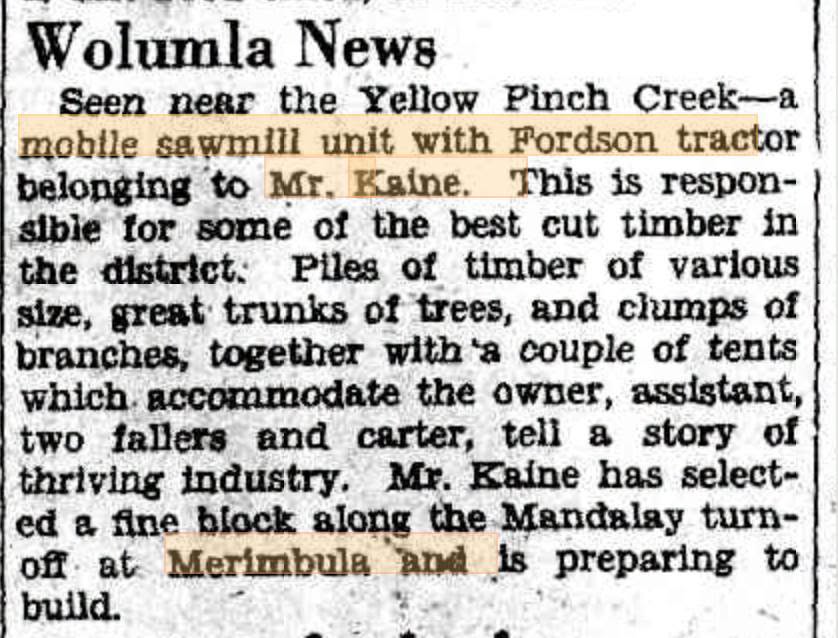
One article in the Wolumla News on 19 August 1947 writes: Seen near the Yellow Pinch Creek – a mobile sawmill unit with Fordson tractor belonging to Mr Kaine. This is responsible for some of the best cut timber in the district. Piles of timber of various size, great trunks of trees, and clumps of branches, together with a couple of tents which accommodate the owner, assistant, two fallers and carter, tell a story of thriving industry. Mr Kaine has selected a fine block along the Mandalay turn-off at Merimbula and is preparing to build.
My mother managed the business affairs of the mill, reports for Crown Lands, orders and invoices until the mill was sold at the end of the 1960s.

Dedicated to the community

My parents dedicated the remainder of their lives to helping improve the town and community they loved, as well as travelling together to New Guinea as part of Rotary International’s effort to train Papua New Guineans to run sawmills.

Noel Matthew recalls: “He had the ability to see what would benefit the local community and help it progress. Arthur encouraged young community members in many ways to follow their dream.


“He was quietly in the background giving advice, references and assistance to support the careers, businesses, education and many other endeavours of younger people. Arthur’s reward was their success.


“He was a wonderful, clever – even in his own way a creative man. A true community asset.”


Other people’s recollections paint this picture too.


Malcolm Granger (Facebook, July 2026): “My first recollection of Arthur is when I started playing golf in 1972. He was President of the Golf Club and he and Charles Savage started a junior clinic after school. He along with the Committee of the day were instrumental in getting the first 9 grass greens established at the golf course !! It was a long time ago but I seem to remember that he was considered a ‘Visionary’!!!”


Joanne Howard (Facebook, July 2026): “I remember Arthur so well. Geraldine Keir and myself played together on the 9 holes. From what I remember we were one of the first cohort of junior golfers at Pambula Merimbula Golf Club and he’d buy each of us a Raspberry, Coke or Sarsaparilla and a packet of chicken chips to share!!! We thought it was the best!!! The Pambula Merimbula Clubhouse was a small shed then. He called a spade a shovel!! He was determined to get the golf club up and running. He certainly achieved his goal.”

Alan Pearce describes my father in a similar way. When Alan and his wife and young child moved to Merimbula for Alan’s employment at the golf club, my father arranged a home for them to rent just down the hill from our home, and Alan fondly recalls many occasions on our back deck overlooking the lake and ocean.

Alan also credits a Merimbula fishing club win by his heavily pregnant wife for the biggest catch of the year to my father, because he knew a secret spot where to find the best tiger worms in town!

During Alan’s time at the golf club, with my father’s support he said they were able to go from making a loss to making a net profit of $100,000 in the first year. The club also expanded from the 9 holes when Alan arrived to 18 holes when he left three years later.

Alan said: “I relied on Arthur a fair bit to guide me. He was a remarkable man in my mind, extremely honest. I was always in awe of him. We used to have the odd argument, which I would never win!”

One thing I remember is that my father used to love posh cars – we always had a posh car.

Alan remembers him driving a brown Ford Fairlane: “It was so big you could barely see him behind the wheel as he wasn’t a big man.”

Alan also describes my father as ‘a very regular man’: “He would turn up at the same minute every day and I very much respected him.”

Arthur Kaine Drive

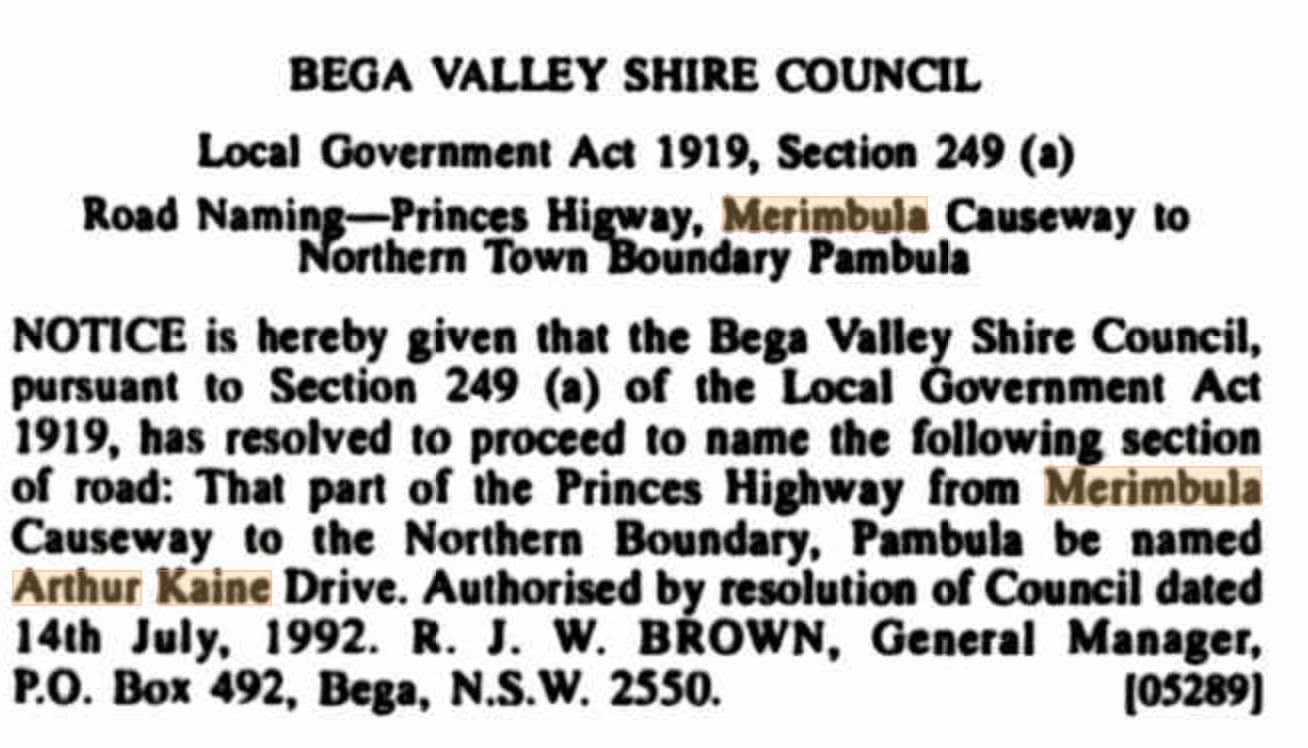
Several months after my father died, Bega Valley Shire Council resolved at a meeting on 14 July 1992 to proceed to name part of the Princes Highway ‘from Merimbula Causeway to the Northern Boundary Pambula’ Arthur Kaine Drive. Someone in Pambula had put in a submission to the Council but I am not sure who that was.

It became officially named Arthur Kaine Drive when it was published in the Government Gazette of the State of New South Wales on 28 August 1992 [Issue No.105], p. 6454.
One of the first questions Melissa asked when she started researching my father’s history was, what would he think about having such a prominent road named after him?

He was an extremely successful businessman and a wonderful father who made a significant contribution to the development of this area. Yet throughout his life, he remained humble and kind and he wouldn’t have put himself out there that much.

It has been lovely to hear from others that they also remember my father, Arthur William Kaine, in the same way I do. As a man who believed strongly that we cannot grow personally and as a community without each other.

  • To see photographs and contribute to this history please visit Arthur Kaine History Merimbula on Facebook HERE  
 

Your community is in crisis, how can you help?

May 28, 2025

Yesterday I was invited to speak about Book Love for Tathra on ABC South East NSW as part of an interview for flood disaster recovery and how people can donate/help/contribute.

Authors, publishers and individuals from across Australia donated more than $100,000 of new books to Book Love for Tathra after fire burnt more than 70 homes and damaged many more on March 18, 2018 in the Reedy Swamp, Vimy Ridge and Tathra fire .

Book Love for Tathra, 2019

I thought it might be useful to share a few things I learnt, as there are so many communities in Australia right now who are going through extremely difficult times from floods to droughts and everything inbetween:

    • What to consider before you put out an appeal: If you are wanting to organise an appeal, be clear about what you are asking for. With book love, I was very clear I wanted new books only. Why? So that Book Love wasn’t treated as an opportunity for people to clear out their bulging book cases and inundate me with second hand books. Also, I wanted the people who’d lost their books to have something new as I imagined if I had lost everything in my home, that receiving something new and undamaged would feel more like a fresh start.
    • Where can people send the donations? I used the local Post Office as the collection point,  but needed to be diligent in collecting them as storage was limited.
    • When to appeal for donations: The best time to start the appeal is in the immediate aftermath, as that is when people are feeling most generous and wanting to help.
    • When do people need/want them? Obviously books weren’t a vital item for people who’ve just lost everything, so I had to take a long-term view. Due to people’s generosity, this did create some logistical challenges as I didn’t have room in my house for all the books. I knew when a truckload of Women’s Weekly cookbooks turned up at my front gate, I would have to find another space.  Fortunately I was able to use a corner in a storage shed that was donated to the Tathra Lions and Rotary clubs, who were coordinating other donated items, and when that shed was no longer available, a local author Margaret Evans (who sadly died in 2025), let me use her storage sheds for the books for free.
    • Distribution – how are you going to get the donated items to the right people? I worked with the Bega Valley Shire Council recovery centre, and they provided guidance and advice for timing and they also coordinated invitations to the event that I put on. Regarding timing, it was almost a year before I distributed the books at a community event. Most people who’d lost their homes in the fires were still renting, or living in a caravan, and didn’t have a new home to put their books into.
    • Leftover books – we had more books than what we needed so what could I do to avoid them going into landfill? I made donations to school libraries and other groups, and the Rotary Club very generously accepted the remaining books to sell at their annual book fair – ensuring any money raised from the books went back into the community.
    • Making it public – keeping in mind that people had experienced significant trauma, it was important that it be a closed event and that everyone was aware of photos and filming and had the opportunity to be included or not included in any publicity.
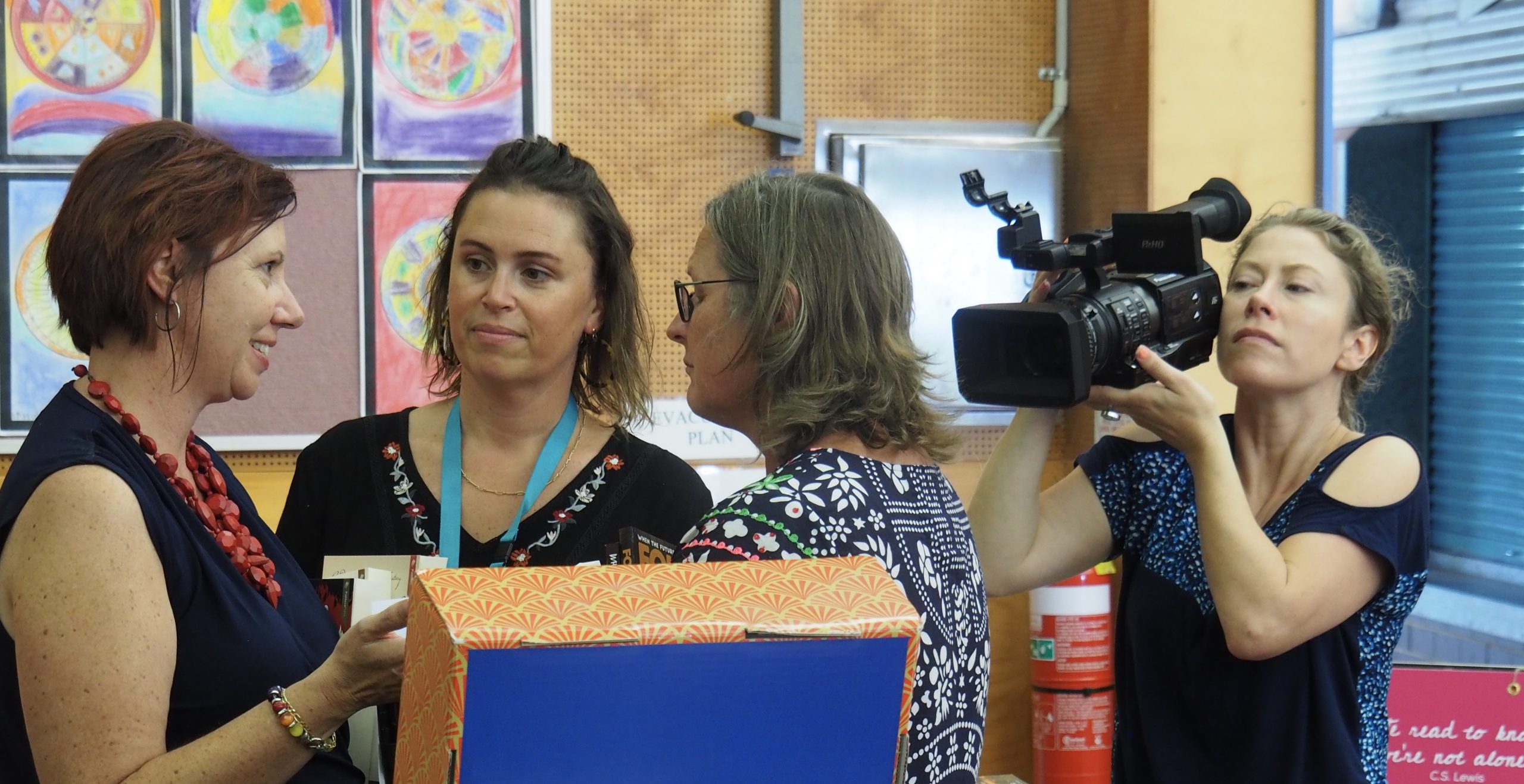
    • Bringing people together – people were given the option of collecting the books privately from the recovery centre or being part of the community event where we set up a giant bookstore including a reading corner for the kids and a cafe. Local cafes and the bakery supported the event and it was heartwarming to watch people catching up, some of who hadn’t been back to Tathra since the fires.
    • The long-term impact – I was fortunate to meet a family recently (six years on from Book Love) who still has the books they chose. I was able to ask about their experience and memory of the event. Their children are a lot older now but still have fond memories of how excited they were to be able to take home as many books as they wanted. This was only one small gesture of kindness but the ripple effect has been long-lasting.

* With funding from the Bega Valley Shire Council, I was able to produce a film of Book Love for Tathra which you can watch HERE.

* You can read more about Book Love for Tathra HERE.


What I’ve learnt as a self-published author of 7 novels

Lessons Learned From The Self-Publishing Journey – Guest Post by Melissa Pouliot

First published by Polgarus Studio, 2017, but remains relevant today, in 2025!

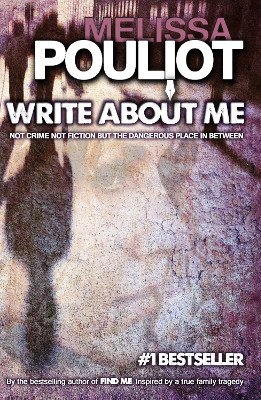
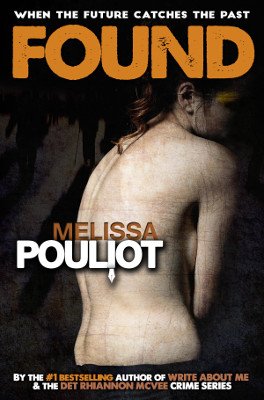
Our guest blogger is Australian crime writer Melissa Pouliot. Melissa’s books are inspired by the disappearance of her cousin Ursula Barwick and the publicity from her debut Amazon bestseller Write About Me, resulted in a new investigation into Ursula’s disappearance. As part of the release of her fifth novel FOUND, Melissa has offered to share a few of her book publishing experiences, some marketing tips and the things she’s learnt along the way:

In 2013 I attended a writer’s workshop in my beautiful coastal hometown of Merimbula, Australia, and met an author who was at the forefront of self-publishing technology. She’d been publishing her books on Amazon for a long time and spoke my language. I’d just finished my first crime novel, Write About Me, and a literary agent had returned it to me with a blunt, sharp note attached: Not strong enough for the current fiction market.

Determined to see my book baby on the shelf I was exploring other options, and publishing it myself made perfect sense. With a journalism degree, my own media and marketing company, excellent contacts in the printing and design industry and a completed manuscript it would be easy. Right?

Well, easy might not be the most suitable word, but I did it. And within a month Write About Me reached #1 on Amazon, and to date, five years later, more than 100,000 copies have been downloaded in the world’s biggest e-book store and thousands of paperback copies are sitting on people’s bookshelves around the world.

I’ve just been through the publishing process for the fifth time and I admit that I expected to be all over it and to know exactly what I’m doing. I’m reading success stories every day and am so inspired to keep moving forward, but I still have much to learn.

The honest truth is that I’m still tripping up along the way, having to resubmit my book covers more than once to meet Create Space requirements, discovering typos and missed words in my novels after they’re published, am not marketing my books half as well as I market my media company clients, and continually feel that time is my enemy. Sound familiar?

It is well time to write a few things down and read them back to myself, over and over, as I work towards perfecting my craft.

1. Know which genre your book fits into: it took me three years to work out that my novels are in the crime thriller genre. I tried to slot them into Young Adult but the language and adult themes, plus the general style mean that although young adults do enjoy them, they are not sitting neatly in the young adult category. I have also tried general fiction and women’s fiction and yes, they do fit into those categories but they are too broad and get lost. My Detective Rhiannon McVee series has some outback romance, but they don’t fit neatly into this category either because that theme is secondary. This all sounds so simple when I look back, and I feel like a bit of a goose, but often you are so close to your writing that you can’t see the forest for the trees. Once I realised I was an Australian female crime writer, and focussed on that genre, everything started to fall into place.

2. Focus on your strengths and outsource the rest: My strength is writing the book and project managing it right through to production. But to do this I need a team of people around me that can give me advice, provide their professional services an help me make my books the best they can be. I use a professional graphic designer for my book covers, book launch material and social media images. He also has a strong marketing sales background so he helps me step away from my tendency to try and fit too many words on the cover and strips it back to strong design, simple words and most importantly, building my author brand.

I also use Polgarus Studio for all my book formatting, something I did myself for my first two books before I found Jason and he changed my world. Although I do have strong desktop publishing skills and can follow the templates Amazon and Create Space supply, it takes me so long to format my books and little glitches such as page numbering do my head in. The time is far better spent on marketing, book launches, media interviews, keeping in touch with readers and the list of never-ending things that comes with publishing a book, and it has also taken a huge amount of stress off my shoulders.

3. Find a professional editor and proof-reader: Professional editing is something I’ve been doing for more than 22 years, but you need someone else to go over your book because I can tell you from experience – you’ll always miss something (or lots!). Like when I discovered, just as I was about to order my first major print run of FOUND for my first book launch event, that one of my characters changed his bike from a Harley Davidson to a Triumph. And this was after my book had been through a three-month editing process involving four editors. It is this kind of logic (or lack thereof) that just cannot be explained! The beauty of self-publishing is that you can update your book as many times as you like, so if you run out of time before launch and have to get your book online, you can still meet deadline then go back to the book when the pressure is off and fix up things that have been missed. I have just discovered that Polgarus Studio provide an editing and proof-reading service so I am now planning to have their professional eye over all five of my books and achieve a consistent style and make improvements to formatting, and I just know they’re going to find a typo or two.

4. Find a professional cover artwork designer with experience in book publishing: When I first published Write About Me I worked with a fabulous graphic designer and my artistic younger brother to design the most creative, out of this world, unique book cover on the market. Unfortunately none of us had any experience in book covers so we missed some vital aspects. My name was so small you had to hold the book up to your face to see it. The hand-drawn sign post and pavers have layer upon layer of meaning to me, but those meanings are not clear unless you get an opportunity to break it down and explain it to people. When your book thumbnail is sitting amongst millions of other books, obscure meanings don’t cut it. The cover needs to make your book jump off the screen or the shelf, and immediately reveal to the reader what it’s about. You also need to build up a recognition of your name, which is your most important marketing tool, so that it becomes recognisable in an instant when people see your covers. Because I am writing a series, I also needed to find a way to link my series books, so we have now introduced a new element to the front that show clearly which books are part of the series.

5. Set aside one day a month to market your books: Many writers have full-time occupations and their novel writing is what they do in their ‘spare time’. They also have family commitments, busy lives and despite being passionate about their writing, it doesn’t always pay off enough financially to give up their day jobs for. And let’s be honest, the writing, editing and publishing process can be so exhausting that by the time you publish your book you are over it. Also, many of us write so prolifically that by the time our books are published we are well on our way to writing the next one. These things combined mean we often sit our books on the shelves (real and virtual) and wait for them to sell. But books are no different to any other product, if you don’t shout them from the rooftops or have others shouting them from the rooftops, you are never going to reach your readers. You can listen to all the podcasts or read blogs from highly successful authors but how do you apply that yourself? One of the US authors in my mentor group, who has established herself in a short three years as a top ranking legal thriller author on Amazon, shared her method with me. She takes one day a month out of her life and spends that full day on book marketing. If you spend one day a month researching, writing blogs, doing paid ads, organising KDP Select promotions, scheduling Facebook posts, connecting with special interest groups who might be able to help with your book sales, building your newsletter list and updating your author website it won’t take be long before you start kicking goals. Prepare a spreadsheet so you can track the success of your marketing spend for the previous month, which will help you decide what you want to do next month. When you spend five minutes here, 20 minutes there and two seconds somewhere else, it gets completely overwhelming and you just go around and around in circles.

Keep writing: You all know the definition of overnight success don’t you? I will never forget reading an article with renowned Australian chef Maggie Beer where she says her ‘overnight success’ only took 20 years. Of course there are plenty of overnight success stories, but how do you establish your reputation, your brand, a loyal readership who will buy every new book you release? By being consistent, reliable and releasing new books. I read a blog early in my crime writing career which suggested you write for 10 minutes a day. As soon as I started doing that it opened up a whole new writing space for me. No matter how busy we are, we can all spare 10 minutes to write down a few words, can’t we? Some days that 10 minutes turns into 20, maybe 30 or maybe even a whole hour. It doesn’t matter what time of day you steal these 10 minutes, and I’ve found it can be as soon as I wake up, when I get back from a bike ride feeling inspired with a whole new character in my head, or while dinner is cooking and the kids are in the shower and not interrupting me.

Most importantly, do what you love and love what you do!

Happy birthday Dad, we miss you x

Today my Dad would have turned 79, but tragically his vehicle and a passenger train collided at the train crossing just two minutes from his home in 2023. We have so many questions about that day which we will never get answers to, and we need to accept that a tragic accident is simply that. There is no why or how, it just is.

I am mostly okay now, and am doing my best to live exactly how Dad would want – to the absolute fullest – but my grief catches up with me every now and then, making me wonder if I’ll ever really be okay.

Since our hearts were shattered on August 16, 2023, Dad has visited me twice in my dreams. The first was so vivid that when I woke up, for a moment I forgot he was gone.

He was full of life and vitality, standing in a crop somewhere on the NSW Liverpool Plains he loved so much. As usual he was wearing a squashed hat that he’d accidentally sat on. As usual he was grinning from ear to ear and talking non-stop – maybe something about the soil health, also likely something about the history of the farm and the people who’d walked this paddock in the generations before us.

I like to think Dad continues to walk over these rich, chocolate soils in his crooked hat telling stories that will never end.

John Waters Hosking, 23rd March 1946 – 16th August 2023

– In honour of our kind-hearted, country gentleman who was loved by many, I have published the story I wrote for him and gave at his memorial service at the Quirindi Sporting Clay Target Club on September 2, 2023 here.

– And here is one of my favourite photos of Dad with a twinkle in his eyes, living his life to the fullest, as he always did. Cheers to you Dad, we miss you x


Sunday Session: Contrasts of a writer’s life

Last week I shared the afterglow of my guest speaking engagement of International Women’s Day about my writer’s life and Detective Rhiannon McVee, and it started off with me speaking about the woman of many hats, or it could also be said, the woman of many contrasts!

I left Merimbula after the event, did a super quick change and pack, and drove for three hours to spend the weekend in Canberra on the sidelines in a basketball stadium while also managing to fit in some incredible dining out and a stint of shopping, before getting in the car again to drive another nine hours that landed me in the outback.

For those of you from overseas, Australia is having an autumn heatwave and so I’ve spent the past week in a very hot, dry, dusty outback – a stark contrast to last week when I stood on stage in front of 130 people.

The reason I share this is because one thing I really wanted to get across in my speech is that yes, I have had an incredible life and done many amazing things, but it’s not all glamour and glitz.

Lately it’s getting more obvious that social media ‘influencers’ or ‘want to be influencers’, are trying to make everything look amazing, glamorous and beautiful. In the right light, with multiple takes, and the increasing number of filters and camera tricks – you can look glamorous in the garden, in the hot sweaty kitchen with your dirty apron after cooking for five hours, in the outback when it’s forty degrees Celsius or even going for a run (I don’t run but if I did, I know I would definitely not look glamorous!)

That is not how real life is, and so this week I celebrate the many contrasts of my life – from glam to not so glam!

Melissa x

Book news – reader review for Rhiannon’s Last Look

A big shoutout to all my readers who contact me directly to share their feelings after reading my Detective Rhiannon McVee crime series and my Missing Annabelle Brown books. One that made me cry was from Aletia who has an incredible sense of humour. She’s also refreshingly honest, and this review gives me all the feels. For those who might be concerned, the cyclone wasn’t quite as bad as predicted but it was bad enough, and Aletia ended up without power for a really long time but is okay now. On the plus side, she read quite a few books after finishing mine, and I love how reading can take us to another place away from the stresses of our lives.

Well you’ve done it again! I’ve just finished Rhiannon’s Last Look and have so many questions. Damn you girl! Also with having ADHD makes it hard to focus, but not with your books. It’s been great while this cyclone is coming in to go to another place and escape what’s about to happen here.

Sunday Session: Rhiannon’s Last Look launch celebrates women, real and imagined

I had the privilege of being invited to be keynote speaker at the Merimbula International Women’s Day event, to a room of women of all ages. The event coincided with the official launch of Rhiannon’s Last Look and it was one of those ‘best days’.

It took me weeks to prepare my speech, only to be told the day before by my mother-in-law and book editor Lyn (86 years young) that I wasn’t allowed to read it. She also recommended not to jiggle or wave my arms around too much.

I had written the speech to be perfectly timed at 20 minutes, but I heeded her advice and the 130+ women in the room have her to thank for my 20 minute speech taking 38 minutes to deliver as I ad-libbed!

For those who weren’t there, here is what I wrote for all women, real and imagined.

Melissa x

March 7, 2025

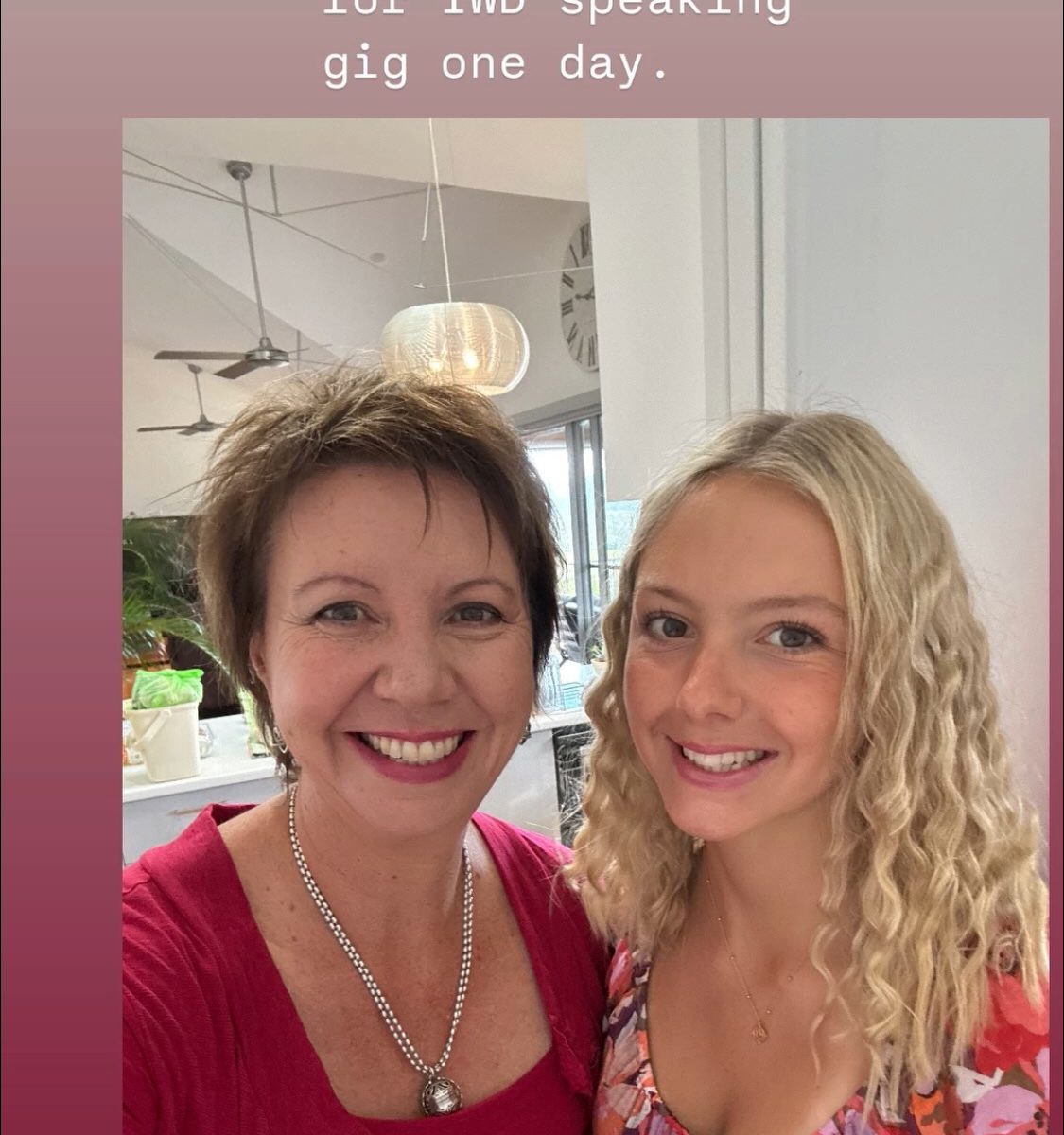
Thank you for inviting me to speak today. It is an absolute honor and privilege to be in this room filled with incredible, amazing women, including my daughter Laura, and many of my friends who have been my women since I moved to the Sapphire Coast nearly 16 years ago – my women who have lifted me up and supported me and worked with me and played with me and had fun with me and made my life full and rich and blessed.

Many years ago, whenever I was interviewed on ABC by one of my favourite brekky show presenters, he would introduce me ‘the woman of many hats’. It’s a name that stuck, and I know all the women in this room will be able to relate to the many hats we wear every single day.

I’ve brought along a few of these hats, many of which really came into play when I became a mum – cricket mum, football mum, music lessons mum, dance mum, working mum, school mum, canteen mum, basketball mum and probably the most time consuming role of all, Uber Mum.

There’s also my outback fencing hat, catering company hat, Day for Daniel hat, missing persons hat, Sisters in Crime festival organiser hat, film, radio and podcast producer hat, magazine editor hat, freelance writer hat and crime writer hat.

We gather on International Women’s Day Under the theme of accelerate action – and those words excite me because to me they represent what women do best. Accelerate Action. It is the acceleration and action of women before me who have allowed my generation to believe we can do anything, we can adapt, we can find a way, we can reinvent ourselves, we can have it all.

It is because of them that I didn’t lose my job when I had my first child, that I could start my own media company when I was 27 and that I can stand here today as a wife of 27 years and mother of three, bestselling author of 7 crime novels, basketball canteen manager, Day for Daniel ambassador, missing persons advocate, business owner and someone who learnt to drive a John Deere 643R tractor (that’s a big green one) when I turned 50.

My life started in a small town named Quirindi where I was surrounded by strong women who worked from sunrise to sundown, ran households on the smell of an oily rag, grew their own food, hand-sewed our clothes, baked up a storm and were heavily involved in the community. I grew up in a traditional household where my father worked full time, and my Mum didn’t work outside of the home but from the minute her feet hit the floor in the morning until she climbed into bed late at night she didn’t stop. My parents both grew up on the land in the typical 1950s household where all the home jobs were done by the women, and everything was centred around keeping the man of the house happy. Mum definitely resisted against that – she could run the household with her eyes closed and fit in a whole lot more. She was on the hospital Auxiliary and started the very first volunteer program at the aged care centre. She was always at school canteen and there to lend a hand at just about every community event. Our cupboards were filled with home-baked goods and we lived a rural life of endless picnics and paddock barbecues and blackberry picking and hunting and gathering – literally – as many people on farms did. I lived in a small country town bubble, but my parents let me have a go at every sport and musical, theatrical, artistic and community project I wanted to jump into.

In this modern world in which we now live, it is difficult to imagine that Mum and my two grandmothers started their lives in tents on remote farms where they fished the nearby creeks for dinner and had no running water or electricity. It is a life we can barely imagine today, with all the luxuries and the connectivity and the online shopping and the world travel and the WhatsApp and the zooms. They adapted, found a way and made the best of their lives, and passed on their pioneering spirit and can-do attitudes down to me for me to pass onto my next generation.

Can you imagine that when I was a small child in the early 1970s, and Mum saved up to buy our first lounge set (gold, chord with decorative rounded arms) and was $100 short and was offered a loan by the furniture store as long as she had my Dad’s signature on the paperwork? She was 70km from our farm and wouldn’t be back for big shopping for another month. She smiled and said she’d be back shortly. After an appropriate amount of time had passed, she returned with the signed paperwork, very pleased with herself for her skill in forging Dad’s signature. Accelerate and act.

I took a gap year after Year 12 and worked as a governess on an outback Queensland sheep station near Cunamulla – when I say near, what I mean is that it took 90 minutes to drive to town for milk and bread, and when the children had a birthday party to go to, we would fly there in a tiny yellow plane. The woman of that household could do anything and was one of the most organised women I’ve ever met- both in the house and in the paddock. Honestly, she ran rings around ‘the man of the house’ and I often wondered how he would have survived without her. I remember a trip to town with a list of jobs a mile long, two young children, and back to back appointments booked and we got not one but two flat tyres on the way. She was dressed in a navy skirt, heels, a white shirt and pearls. I watched in awe as she changed the tyres on the side of a dusty outback road without getting a speck of dust on her town clothes, and marvelled at the fact we weren’t late to any of the appointments because she’d factored in potential time delays.

My outback adventure was never part of a long-held dream or plan – I had my sights set on a city career, but my Aunty Cheree, the mother of my cousin Ursula, took me to an outback employment agency and helped me find this job. We’d had a tumultuous few years after Ursula went missing when I was 15 and I think Aunty Cheree could see that I was lost, and needed to have a year away from my family, my small hometown and all the trauma of not knowing if Ursula was dead or alive before I started university.

After this gap year, I studied a Bachelor of Commerce, thinking I would end up in the corporate world as an accountant, but after two years I was still unable to do a bank reconciliation and realised my talents lay in words, not numbers.

So where did I end up? You wouldn’t believe it, but my first newspaper job was for the Cunamulla weekly paper, in the same part of outback Qld where I had spent my gap year. I was a young, green, enthusiastic and fairly clueless reporter who typed my stories on a typewriter and faxed them through to the editor where the printing presses were located, where they were retyped (with spelling mistakes!) and then put onto the presses.

I had no air-conditioning, just a $50 fan from Trev’s Bargain Emporium, which failed to keep up with the 45 plus temperatures in my very first newsroom. Thankfully, I backed onto a beer garden, because my office was part of an outback pub that filled the whole block, so I always had easy access to a cold drink at the end of the day.

I left the outback stepped into the big time to work in a newsroom of a tri weekly newspaper in Horsham in Victoria which had automatic doors, air conditioning and reception staff in uniforms.

Life was hectic, we were fast approaching the 2000s, and having learnt how to run every single aspect of the paper in my first five years, I had my sights set on becoming the first female editor of the Wimmera Mail-Times. (Side note – the Wimmera Mail-Times didn’t appoint a female editor until 2012 so I may have been waiting a while).

In 1999, along came my first child, putting my journalism ambitions well and truly on hold. I could never have imagined the ways becoming a mother changed my life and brought my best laid career plans to a screaming halt. I loved working, I loved writing, I loved being in the media but working in a high-stress newsroom was not a mum-friendly career path. What could I do? How could I Accelerate Action? Well, I started the first media agency in Western Victoria in 1999 – one that I still have today where I still work for my very first client 25 years on.

I set up one of the very original working from home businesses long before working from home became a thing. Emails and the internet in rural Australia were new technologies. When Oprah first started using Skype, I started Skyping with my clients who were all around the world. It doesn’t sound like anything all that unusual now, but back in the early 2000s, before Facebook, Tiktok, Instagram, Zoom and Microsoft Teams – Skype was cutting edge, limited only by dial up internet!

I was able to scale my business up and down around the birth of my next two children and inbetween child number two and number three I moved out of my home office set up a bustling office which I filled with other Mums like myself who were passionate and creative, and had the same ambition to Accelerate Action. We were the same type of women of the women who had mentored me and this group of young professional working mums who got shit done, worked for ourselves, made our own way, refused to be limited by male dominated workplaces.

It was a crazy but extremely special period of my life with an incredible amount of energy – the type you can only get when you put a whole bunch of working mums together who understand and appreciate that to get what you want out of life, you need to get on with it. We’d menu plan together, we were able to work from home if we had sick children, we streamlined our processes, we embraced new technology, and we ran!

When Laura was a baby my husband and I made another life-changing decision and moved to our holiday spot – Merimbula. As far as my career went, it was business as usual, although I closed the office and continued to work with all the creative women in my life online, many of who I still work with today.

I’m not sure if it was the coastal location, or turning 40, or just a coincidence or just pure craziness – but in 2013 I realised a life-long dream to write and publish a book. I’d written and published books before, but these were non-fiction and marked historical events, but since I was a teenager I’d dreamed of being a ‘writer’ – along the lines of Anne of Green Gables who was and still remains one of my most admired fictional women.

It came about in much the same way that most times women decide a bit of Accelerate Action is needed – and it was my desire to accelerate some action for the cold case of my cousin Ursula Barwick who went missing in 1987 that set me on this path. It was then that someone named Rhiannon McVee walked into my life, and she’s still here today.

I’ve always been a writer, but it’s not until I sat down to write Write About Me where I learned the true power of words. Five years and my first five novels later, I spoke in Canberra at an event hosted by the Australian Federal Police and said: “Words have real power. Words can wound, words can heal. And in my case, words can find people.”

And although Detective Rhiannon McVee, who first wandered onto the page in Write About Me then got her own series which started with Find Me, is fictional – I give this strong, female character lead full credit for helping find Ursula. She got me through what became a very high profile search for Ursula, which uncovered decades of poor police work and highlighted a male-dominated police force who treated teenage runaways like criminals.

Rhiannon took a while to unveil herself and I chose her back in 2013 because she represented everything I wished we had when Ursula first disappeared aged 17 after getting on a train on the NSW Central Coast to Sydney.

When I published Write About Me, I got a whole lot of new information and but I didn’t have the skills or the knowledge to find Ursula, and we were also of the belief she had met with foul play during the Underbelly years of Kings Cross. And here I was, a wife and mother of three in a small coastal town, scared to death of what hornets’ nest I might have opened.

What I needed in my life was a detective who would really care about finding missing people and Ta-Da, along came Rhiannon. She needed certain qualities – she had to be a country girl, down to earth, physically fit and strong, bloody minded, strong willed, full of self confidence and in a workplace dominated by men, she needed to be prepared to Accelerate Action for change.

I also wanted a woman who wasn’t afraid to break the rules or at least bend them, who was not afraid to rock the boat, and also not afraid to stand up for herself, but with enough humble humility to know that sometimes the best way to navigate and get what you really need is to learn how to work with men and to find the men who can help you achieve what it is you’re setting out to do.

In Rhiannon’s case, she found an older, much more experienced detective, Andy Cassettari, who was by far from a perfect man, but who took Rhiannon under his wing and mentored her and supported her in what we all now know was a very corrupt police system in Kings Cross in the late 80s. See what I did there? I’m talking about people who aren’t real, although they are real to me, and they’ve found their space in a real world. That is the fun about being a writer – being able to flip between fact and fiction, and exist in that space inbetween.

Back to Rhiannon – where was her back story going to be based? It was natural to place her in a place that changed my life back in 1991 – the year I fell in love with the Australian outback, despite its heat, its flies, its isolation. At times, it frightened the shit out of me, especially at night in the little cottage where I lived by myself, a couple of kilometres from the main homestead, where wild pigs would go through my bins at the back door and green frogs that were breeding in my septic would hop around the house.

Maybe it was the terror I felt night after night, when I slept with every light on. My imagination ran wild as to who was lurking in this remote location and how, if I got lost, I would never be found – making this the perfect setting for crime novels and missing people.

After I’d written Find Me – where Rhiannon McVee started to come to life on the page, Kings Cross Detectives assigned the very real Detective Sergeant Kurt Hayward to Ursula’s case. I remember him telling me about a young plain clothes detective, Amy Scott, also very real, who begged him to be on Ursula’ case. This was exactly the kind of thing Rhiannon McVee would do.

I didn’t meet Amy in person for another year, by then I’d written my third novel When You Find Me. I was in Kings Cross for a picnic for Ursula and a national appeal by the NSW Police and the Australian Federal Police for people to come forward if they knew something about Ursula.

Amy was a tomboy. Her hair was blonder than Rhiannon’s but Amy’s eyes were the same clear blue I had described for Rhiannon in my book. She was also a similar strong, fit build as my Rhiannon, and she was down-to-earth, tenacious, unafraid.

Just as Rhiannon refused to give up on finding her missing people, Amy refused, absolutely, categorically, to give up on Ursula, even though on more than one occasion she was told by her superior officers and people high up in the New South Wales Police Force that she would never, ever solve this case.

And don’t you love it when you’re told not to do something, or that you can’t do something, or that you won’t do something, and then you are able to prove everybody wrong?

There possibly was a woman just like Rhiannon. Who knows? But as I got further into Rhiannon story, I put all my hopes and dreams for young women of the 80s, of which I was one, and Ursula was one. I and try to make them come true. A lot of the things Rhiannon does and what she achieves as a young policewoman in this time i are potentially completely, completely fictional, and probably if you were in that era and lived in that time, unbelievable. But it is women like Rhiannon McVee who come in and shape up the system.

They might not change things straight away, but there will come a time where the changes that they push for will come to fruition. During my career, I have worked with a lot of incredibly strong intelligent women who shook up the system. They haven’t always come out on top but one thing that they have all done is they have managed to reinvent themselves. They’ve adapted. They have not given up, and they can be rest assured the issues they raised and the changes they pushed for may not have happened overnight, but they will happen. Yes, just like the Pantene Ad.

We have a lot more opportunity to go into situations with our eyes wide open in this day and age, technology plays a big part in that. Social media, as much as it can be damaging, time sucking, has given us access to information and knowledge that we didn’t have access to when I was growing up. We always have to be very careful as to what is fact and what is fiction – that’s an age-old story – this hasn’t really changed except that today we are inundated in our more ‘connected’ world. I encourage all women in this room to look at things with a more critical eye and ask ‘What is really going on?’

I personally aim to be consistent, reliable, lend a hand when and where it’s needed and mostly importantly, always show up. As I’ve gotten older I’ve learnt to choose more wisely about where to put my energy and to focus on what is important rather than what isn’t. It’s taken me many years to stop sweating the small stuff, but when you don’t, it’s liberating!

There’s a few things that I would like you to walk away from this day believing and see me as living proof that these things are true.

•    Number one, you are never too old to learn something new. When I was 40, I learned how to publish books. When I was 50, I learned how to drive a tractor. I wonder what I am going to learn next?

•    Number two, don’t give up hope. One thing that kept me going through the search for Ursula was hope. I held onto that hope tightly, and blindly at times, but hope is what got me through. No matter what situation you are in or what challenge you are facing, do not ever give up hope.

•    Number three, leading straight on, is that you will find a way, because you are a woman, and women always find a way.

•    Number four, we may end up in situations where we feel that the gender balance is out of whack. A lot of the time we won’t be able to do anything about that. I believe what’s important is going back to three. You will find a way, whether it’s in your personal life or your work life. You will find a way to navigate around whatever situation is going on and find a way to achieve the best possible outcome.

I would like to end by sharing two of my all-time favorite quotes.

One my favourite book of all time, Anne of Green Gables: “Isn’t it nice to think that tomorrow is a new day with no mistakes in it yet?” 

And the second from Maya Angelou “I’ve learned that people will forget what you said, people will forget what you did, but people will never forget how you made them feel.”

What I sincerely hope today is that I have made you all feel like you could rule the world, because you can.

Sunday Session: What’s missing?

November 2016
It is an older crowd, but an appreciative one. They’ve gone to a lot of trouble for their special guest.

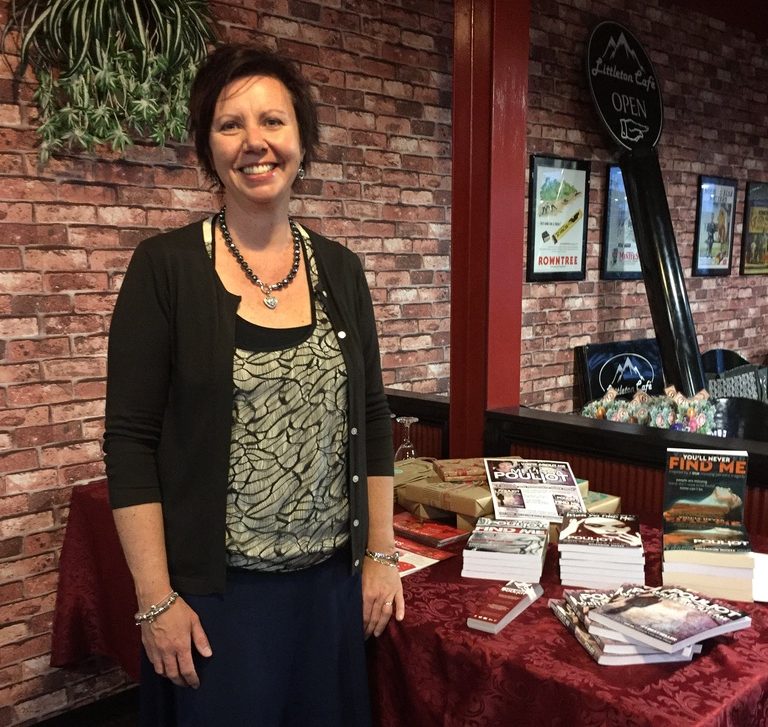
It’s pouring rain when I arrive but there are plenty of gentlemen with umbrellas to carry my heavy book box inside. They’ve set up a sale table for my crime novels, which are inspired by Ursula and the missing, with a burgundy tablecloth that matches the brick walls and dark timber of the café where the Rotary club has their monthly dinners.

I had turned myself inside out to get here on time. I swapped out my working from home clothes to something that felt like it passed muster for a formal event including my favourite cardigan, and ran out the door, leaving my husband with the dinner and bath time chaos.

Bread roll and first course over, it is time for me to speak. With a beaming smile and the standard ‘I’m totally okay’ façade I manage to put on at all these speaker events, I share the story of my desperate search for Ursula. It is 2016, and it will be another year before she is found. I recall memories of our childhood, and appeal for everyone in the room to share her story because I was absolutely certain that someone, somewhere knew where she was.

When I’m done, an elderly gentleman with stooped shoulders and shaking hands takes a few moments to get out of his chair. He stands close and reaches his soft, crinkled hand out to shake mine, before bringing the other hand over it and clasping mine tight.

He shakily holds the microphone. It is then, at close quarters with his lined and kind face, I notice his eyes are glassy and filled with tears that sit in swollen droplets across the full length of his bottom lid.

He addresses me before he addresses the crowd.

‘First of all I’d like to say that you are very brave, and that your cousin Ursula is very lucky. I am not brave like you.’

A tear spills over and rolls down the lines which age has creased into a million hidden stories. His accent makes it hard to pick up every word but once I become accustomed he draws me into his tale.

‘When I was a young boy in Germany I used to ride my bike everywhere in my village. Delivering messages every day, lots of messages…’

The room falls silent as he recounts his wartime story, as a young Jewish boy who lost his entire family during the Second World War. He often wonders if he could find them, but war memorial events like ANZAC Day render him incapable of leaving his house.

I don’t remember all his exact words but I do remember how they made me feel – that I am not alone in this grief for Ursula that seems to go on forever. Is she alive? Is she dead? Did they survive the prison camp the Nazi Germans took them to? Was she living happily ever after in a foreign country far far away? Were they living happily ever after in France or Italy, having escaped and miraculously surviving the war?

His eyes are leaking faucets now as he repeats, ‘You are so brave. I am not brave like you. You must love her very much.’

It is the first time in the past three years since I set out on this mission impossible to discover what happened to Ursula when she disappeared in 1987 that someone has called me brave. It is also the first time someone has so eloquently acknowledged the power of familial love.

Feeling somewhat shattered by the whole experience I stumble out the door into the crisp, cold night which is now washed clean and smelling like eucalyptus leaves and freshly mown grass. The room had cleared out like an RSL Club after lunch service, so it was just me to lug my half empty box of books to the car and face the dark drive home, on alert for kangaroos and wombats.

My mind races in all directions. This elderly gentleman has given me strength and resolve to keep moving forward through the awkwardness and discomfort of sharing Ursula’s story and accepting the ending might not be what I hoped.

As I am about to turn out the light and go to sleep I flick through the photos of the night. Something doesn’t look right. There is is. My cardigan is missing a button. Despite my goal to appear neat, organised, in control – this wife, mother of three, business owner and public advocate for Ursula and the missing is showing signs of disrepair.

I obsess over this missing button as I try and drop off to sleep, even though I know far more important thoughts need my attention.

Tears drip onto my pillow while I imagine the hundreds, thousands, millions of people in the world too terrified and traumatised to search for their missing loved ones. What can I do to help them? Tears flow more freely. I’m not exactly winning or taking giant steps forward in my own Pollyanna mission for Ursula. There is nothing I can do for anyone else. Absolutely not one thing.

I was wrong though. I couldn’t see it then but I saw it later. Not giving up hope for Ursula spread hope for others. What we learnt in our search, they could do in theirs. A lot of changes for the better happened because of this renewed search for Ursula.

This lightbulb would turn on down the track. But tonight I fall into a fitful sleep and dream of buttons missing from cardigans, never to be found again.

Melissa x

My debut crime novel, Write About Me, sparked a new investigation into the disappearance of my cousin Ursula Dianne Barwick. Five years and five novels later, she was FOUND.

Sunday Session, with love

Welcome to my mp book news Sunday Session, a quick check in to see how you’re going and what you’ve got planned for your Sunday!

Sunday Session, with love

This weekend I have love on my mind. You’d need to be living under a rock not to know it’s Valentine’s Day season, and romance is here to stay. My husband and I laughed as we wished each other Happy Valentine’s Day. It’s not that we’re past it, it’s just that we’re past getting caught up in the flowers, chocolates and the romantic gestures from sunrise to sun-up!

In saying that, I’m a real romantic and always thought I’d write romance novels and not crime novels. My first true love, like many women my age, was Johnny Castle. Many of you will know exactly who I mean, but if not, the next clue is Dirty Dancing!

Although my novels sit fairly and squarely in the crime genre, I haven’t been able to resist exploring the love story of Rhiannon and Mac – MacVee. Their red dirt road to true love is not exactly smooth, but for the most part, it feels like they’re meant to be together forever.

Isn’t that where things ended up for Johnny and Baby? After the final scene where he lifts her high in the world’s most famous and most watched dance move, I am sure they headed off, hand in hand, to live happily ever after. Or did they?

As for Rhiannon and Mac, I get a lot of readers tell me how much they love the scenes that include the glamorous cowgirl Wynona who has a short fling with Mac  while he and Rhiannon were on a break.

In the spirit of Valentine’s, please read on for a few snippets from You’ll Never Find Me, book 3 in the Rhiannon Series.

Happy Sunday y’all!

Melissa x

You’ll Never Find Me

Wynona took another sip of her drink. Mary Chapin Carpenter was playing on the jukebox. She was new to the country scene but Wynona knew she’d hit big one day. She was singing a song for Wynona and Mac, What You Didn’t Say. The lyrics were written just for them, especially the line about not what you said, what you didn’t say. It was a sign. That’s it. She had to go back. She had to touch him, feel him, and show him that she was the one for him. She’d send him a letter first, just a casual Hello, how ya going? Wynona was going to Australia to get her cowboy. Then bring him back home, hand in hand and side by side, to ranch together and live happily ever after.

Mac was in turmoil. Rhiannon was coming home for the Bollon B&S, and so was Wynona. And it was only one day away. He’d managed to shield Rhiannon completely from his relationship with Wynona. He now regretted not being more honest after he and Rhiannon got back together. A few times he’d come close to telling her, because he hated hiding anything, but the words always got stuck.

He knew he had to tell her. Tonight was his last chance. Because when he had to introduce them at the B&S, he knew Rhiannon would know. She would sense it. She would see it.

Everyone north of the border knew Mac and Wynona had been a hot item. Their relationship had been hard and fast. It didn’t last long but it left a mark wherever they went. How could it not, when Wynona was one of the most beautiful women God put on this earth, and Mac her perfect accompaniment? They seemed to have an ideal relationship, working side by side on stations all around the southwest. They worked together and played together. Those who knew Rhiannon had broken Mac’s heart felt relieved for him. Happy he had found new love.

He was hip to hip with Rhiannon, beer in hand and deep in conversation with old friends from boarding school. The chattering crowd quietened. The change in noise level was what got Mac’s attention.

He looked up and his breath drew in, then stopped, his heart a giant flutter. He’d forgotten how stunning she was. It was like she was from another world. And she was. She should be on the cover of a magazine.

He squeezed Rhiannon’s hand tight. She winced as the blood stopped flowing to her fingers, and her eyes followed his. She felt ill. Sick to the stomach.

Wynona was dressed in a beige silk décolleté singlet that draped low to her small perfectly rounded breasts, but not so low that it was tacky. Her blemish free tanned skin was the perfect complement. Not a freckle in sight. She had teamed her top with fitted black silk pants. Perfectly pressed pleats fell neatly  at the front, following her slender legs forever.

She was one of the tallest women Rhiannon had ever seen. She knew without seeing that the fabric hugged Wynona’s perfectly toned arse cheeks at the back, and that from every angle she was perfect. Dammit.

But it wasn’t just her body. It was her perfectly proportioned facial features. Her glorious dark hair was piled high on her head, with escaping tendrils falling delicately around her face. It was like an artist had created her.

Her nose was tiny. Her teeth were pearly white, and amazingly straight. Her large dark brown eyes, so dark they were almost black, were stunning. Sparkling as well. And her mouth. Not big and wide and overly smiling like Rhiannon felt hers was. It was also in perfect proportion. Dazzling. She looked a bit like Elle Macpherson, but with darker hair and bigger eyes.

Rhiannon’s face flushed as Wynona strode purposefully towards Mac, her feelings for him written all over her face. Wynona didn’t even notice Rhiannon standing by his side, with her gaze so intent upon Mac.

Sunday Session – cowboys and crime

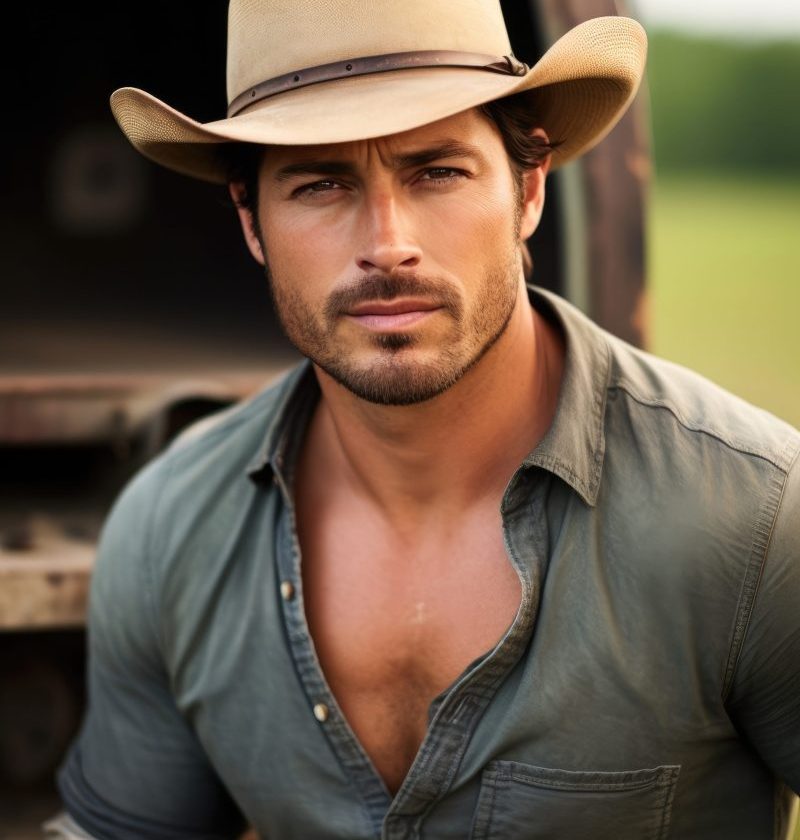
Aha, I know I have your attention! I asked if this cowboy is what my readers imagine Mac to look like. They knocked the nail on the head when they said he looks very much like an American cowboy, whereas Mac is a true blue Australian cowboy. Another reader asked if this is an AI-generated image. I’d say it potentially is. If not AI, it is very much photoshopped! She also imagines Australian cowboy Mac to be a lot more rugged, maybe with a scar. This is how Mac is in my head – he’s not so smooth faced, he’s definitely more rugged and more real. However, the fictional cowboy that posed for this photo is still good inspiration!

My obsession with Australian cowboys, country music and western movies started before I can even remember. I grew up going to rodeos, country shows and country races. When I left home at 18 and spent a year in the outback, I loved the true outback country race meetings, polocross weekends, outback pubs and Bachelor and Spinster balls.

It’s fun to create new characters and place them in the settings I’m familiar with, although what happens in my books is far removed from my own experiences! That’s the joy of fiction – it’s an escape both for me as a writer and you as a reader.

I also had this message from Lisa in response to my question about whether Mac and Rhiannon belong together: I love Mac and Rhiannon together, but figuring out their next moves as they have different ideas going forward. Some compromises need to be made. I’ve read all the books in the series and love their dynamic. I like a good romance, as well as, a crime story.

I can’t tell you how much I love hearing from my readers – it’s such a great boost when I’m writing my next book and feeling stuck and uninspired – it’s YOU who encourage me to keep at it!

One more look at this dreamy fictional cowboy. Not Mac, but he does alright.